Travel tips
Shibuya to Tsukiji: An Allergy-aware and Plant-forward Eats Route in Tokyo, Japan
Explore Tokyo’s best neighborhoods for allergy-aware and plant-forward dining with a practical route from Shibuya through Tsukiji to Ginza, using official resources to support vegetarian, vegan, halal, and allergy-sensitive travelers.
AI illustration · Wardhead AI · AI-generated illustration
Tokyo, Japan is renowned for its intricate food culture, but for travelers with food allergies, vegetarian, vegan, or halal requirements, navigating the city’s culinary scene requires careful planning. This practical route—linking Shibuya’s energetic dining, Tsukiji’s iconic market, and Ginza’s sophisticated kitchens—models how to enjoy Tokyo’s world-class eating with special diets in mind. Each step draws on official resources and guides designed to help you avoid hidden ingredients and make rewarding, safe choices.
Why Special-diet Planning Matters in Tokyo
Tokyo’s dining landscape is diverse, with neighborhoods like Shibuya, Tsukiji, and Ginza rich in variety. However, official Tokyo and national tourism sources consistently note that ingredient labeling and allergy transparency in Japan can be inconsistent. Many broths, sauces, and even seemingly vegetarian dishes may contain fish or animal-derived ingredients. This means travelers with dietary needs should rely on curated guides, downloadable communication cards, and advance checking when planning their food stops. [Sources: gotokyo.org, japan.travel]
Morning: Plant-forward and Allergy-aware Breakfast in Shibuya
Shibuya is one of Tokyo’s liveliest districts, filled with contemporary restaurants increasingly attuned to dietary restrictions. According to GO TOKYO, it’s a leading area for modern plant-based eateries and international chains that provide multi-language menus, including vegetarian, vegan, and allergy-conscious options. Several establishments here are listed in the official TOKYO Vegan & Vegetarian Restaurant Guide, which is highly recommended for initial venue selection.
Practical tips for the Shibuya area:
- Use the Vegan & Vegetarian Restaurant Guide to shortlist suitable cafes or breakfast spots.
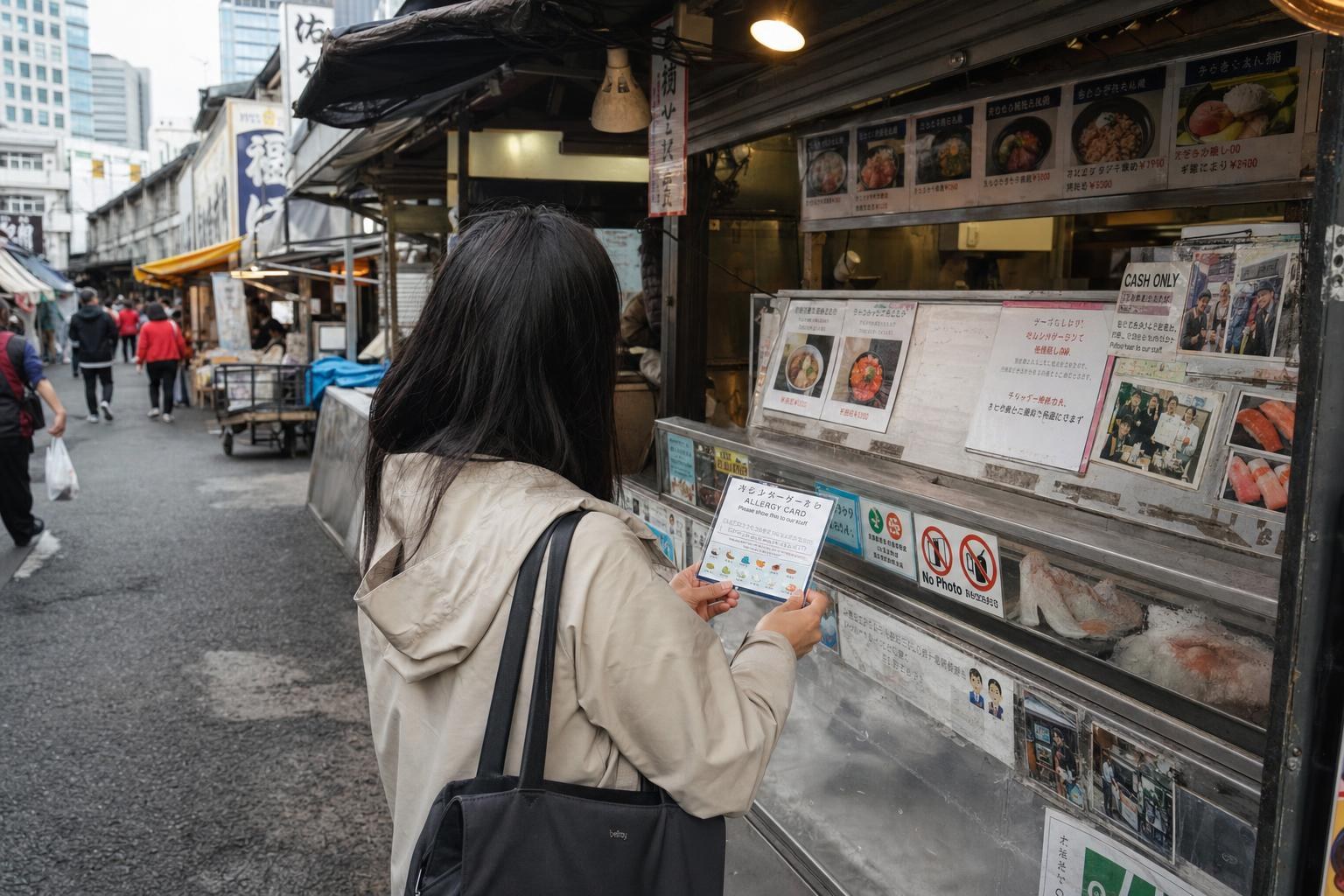
- Bring a printed or digital version of a bilingual allergy or dietary restriction card available from the Japan National Tourism Organization (JNTO); these are designed for clear communication with staff.
- Note that soba (buckwheat noodles) are common in Tokyo; buckwheat is a major allergen, so check with staff or guides before ordering.
Popular stop types (to select using current official guides):
- Modern vegan or vegetarian cafes near Shibuya Station, with English menus and ingredient listings.
- Salad bars and international chains offering rice bowls and customizable dishes with allergy and dietary labeling.
Midday: Navigating Food Stalls and “Invisible Ingredients” at Tsukiji Outer Market
A short transit ride from Shibuya, Tsukiji (the Outer Market) offers a chance to experience Japan’s seafood culture up close. For those with dietary restrictions, this area presents more challenges—many street foods and prepared dishes (such as soups or grilled items) may contain dashi, a fish-based stock.
What official tourism resources recommend:
- Verify ingredients by directly asking stall operators; use JNTO’s bilingual dietary cards for accurate communication.
- Research market stalls or sit-down restaurants with the help of the official restaurant search tool, which allows filtering for vegetarian, vegan, halal, or allergy-aware establishments.
- Select simple snacks like plain onigiri (rice balls) or grilled vegetables—always confirm fillings or condiments, as animal-derived stocks and sauces are widespread.
- Look for market teahouses or food court areas where reading ingredient labels at your own pace is possible.
It’s important to remember that vegetarian and allergy-based labeling is not consistently applied at Tsukiji’s market stalls, making direct communication essential.
Afternoon: Ginza’s Refined Dining and Ingredient Transparency
Ginza, east of Tsukiji, is celebrated for refined, upscale dining. Many restaurants in this district, including those referenced in the Vegan & Vegetarian and Muslim Travelers’ Guides, provide more detailed menus and ingredient disclosure—particularly if you make an advance reservation and communicate your dietary needs.
Best practices for Ginza dining:
- Use official guides to select restaurants noted for allergy-friendly, vegetarian, or halal offerings.
- Make reservations in advance, specifying your dietary needs; Japanese restaurants, especially at the higher end, value prior notice and can often accommodate requests if informed ahead of time.
- Consider sampling Buddhist temple vegetarian cuisine (shojin ryori), which is reliably plant-based according to national tourism sources.
- High-end hotels in Ginza can also assist with dietary requests, as staff are more likely to be familiar with international dietary expectations.
General Route Logistics and Neighborhood Connections
- The Shibuya–Tsukiji–Ginza route can be covered using Tokyo’s efficient Metro network. While all three areas are linked by multiple lines, check current official maps for your best transfer route; for example, the Tokyo Metro Ginza Line directly connects Shibuya and Ginza, but does not stop at Tsukiji. The Tsukiji market area is served by the Tokyo Metro Hibiya Line and Toei Oedo Line (with a transfer required from Shibuya).
- Prioritize dining places featured in the latest official restaurant and dietary guides for each district.
- Carry several copies of your printed allergy/vegan/halal cards for use at each dining stop.
Resources and Tools to Use Before and During Your Route
- Download and reference the TOKYO Vegan & Vegetarian Restaurant Guide and the TOKYO MUSLIM Travelers’ Guide, both available from GO TOKYO’s official website.
- Visit the JNTO restaurant search tool and filter by dietary restrictions for up-to-date verified restaurant listings in Tokyo.
- Bring downloadable bilingual dietary requirement cards, which you can show to restaurant staff throughout your journey.
Being Allergy-aware and Plant-forward: Key Challenges
Tokyo’s official tourism authorities highlight two persistent challenges for travelers: “invisible ingredients” (such as dashi and mirin, which contain fish or alcohol) and inconsistent allergy or vegetarian labeling. These underscore the need for diligent planning and confirmation at each food stop.
Special-diet dining in Tokyo is improving, but success relies on checking menus, using reliable resources, and not assuming all plant-based or allergy-safe claims are universal. Advance communication, official guides, and flexibility enable travelers to enjoy Tokyo’s rich food scene safely and deliciously.
Key takeaways
- Tokyo’s culinary scene offers a growing but uneven selection of allergy-aware and plant-forward options, especially in neighborhoods like Shibuya, Tsukiji, and Ginza.
- Official Tokyo and national tourism guides are the best sources for up-to-date vegetarian, vegan, halal, and allergy-sensitive restaurant listings.
- Bilingual dietary and allergy cards, downloadable from official tourism sites, are invaluable for clear communication.
- Hidden animal- and fish-based ingredients (like dashi and mirin) are common in Japanese cooking—even in otherwise plant-based dishes.
- Advance reservations and prior notifications increase the likelihood of accommodation, especially at higher-end restaurants in Ginza.
- Soba (buckwheat), a Tokyo specialty, is both popular and a potentially significant allergen.
Comparisons & planning
| Neighborhood | Dining Options | Allergy/Vegetarian Resources | Official Guide Availability | Common Dietary Challenges |
|---|---|---|---|---|
| Shibuya | Modern cafes, global chains, plant-based menus | English/bilingual menus, guidebook-listed venues | TOKYO Vegan & Vegetarian Guide | Buckwheat (soba), cross-contamination |
| Tsukiji | Seafood stalls, rice balls, simple snacks | Limited labeling, best to ask directly | National search tool recommended | Fish-based dashi, hidden stocks, inconsistent labeling |
| Ginza | Upmarket dining, shojin ryori, hotel restaurants | Ingredient transparency, advance requests welcomed | Vegan/Vegetarian & Muslim Guides | Hidden seasonings (mirin, sauces), advance notice needed |
Travel checklist
- Download the TOKYO Vegan & Vegetarian Restaurant Guide and the TOKYO MUSLIM Travelers’ Guide from GO TOKYO.
- Use the Japan National Tourism Organization’s (JNTO) restaurant search tool to filter for dietary needs by neighborhood.
- Carry multiple printed or digital copies of bilingual allergy and dietary request cards.
- Check for recent reviews or guide updates for chosen restaurants, as ingredients and policies can change.
- Confirm with staff about hidden ingredients—especially dashi, mirin, and buckwheat—using your dietary card.
- Plan for a flexible route: prioritize areas around Shibuya Station, Tsukiji Outer Market, and Ginza, but adapt as needed with official guides.
Frequently asked questions
How can I find allergy-friendly or vegetarian restaurants in Tokyo?
Official guides like the TOKYO Vegan & Vegetarian Restaurant Guide and Japan National Tourism Organization’s restaurant search tool allow you to filter for allergy-friendly, vegetarian, vegan, and halal options by neighborhood.
Does Tokyo have standardized allergy or ingredient labeling?
No, official tourism sources note that labeling for allergies and vegetarian foods can be inconsistent across Tokyo’s restaurants and markets. Always confirm directly with staff and use official guides and dietary cards.
Where can I get bilingual allergy or dietary request cards?
You can download printable bilingual dietary and allergy cards, designed for travelers, from the Japan National Tourism Organization website. These are specifically recommended for clear communication in restaurants and markets.
Are there reliable plant-based or halal options around Tsukiji Market?
While Tsukiji is known for seafood, some stalls and cafes offer plain rice balls or grilled vegetable items, but ingredient checking is essential due to hidden fish-based stocks. Use the national restaurant search tool for up-to-date spot checks.
Sources and research notes 2 sources
Based on official source material. Check provider websites for changing visitor details.
Conversation
Sign in or create an account to join the conversation.