Itineraries
Ciutat Vella Market-to-Plate Walk: Linking La Boqueria, Santa Caterina, and El Born’s Food Scene in Barcelona, Spain
Explore Barcelona’s Ciutat Vella on foot with a focused route connecting Mercat de la Boqueria, Mercat de Santa Caterina, and tasty stops in the El Born neighbourhood. This itinerary highlights historic markets, small plates and seasonal food events, and gives practical tips for using public transport and planning your own local tasting tour in the heart of Barcelona.
AI illustration · Wardhead AI · AI-generated illustration
Barcelona’s Ciutat Vella, the city’s evocative Old City district, is home to some of its most iconic markets and a vibrant street-food culture. For travelers eager to experience local life through the senses—sight, sound, and above all, taste—a walk connecting the historic Mercat de la Boqueria, the architecturally striking Mercat de Santa Caterina, and the atmospheric El Born neighbourhood offers a rewarding way to sample the best of Catalan gastronomy, all within a compact urban loop.
This guide presents a realistic, officially-supported market-to-plate walking itinerary, linking these culinary hubs and offering practical suggestions for planning your own tasting adventure in the heart of Barcelona, Spain.
Getting Oriented: Markets and Neighbourhood Logic
Ciutat Vella is Barcelona’s most walkable historic core, comprising La Rambla, the Sant Pere/Santa Caterina sector, and the El Born quarter. Official tourism resources present these areas as contiguous and ideal for day itineraries (source: Turisme de Barcelona). All three markets—La Boqueria, Santa Caterina, and the El Born food cluster—lie within this district, making it simple to plan a loop without lengthy transfers.
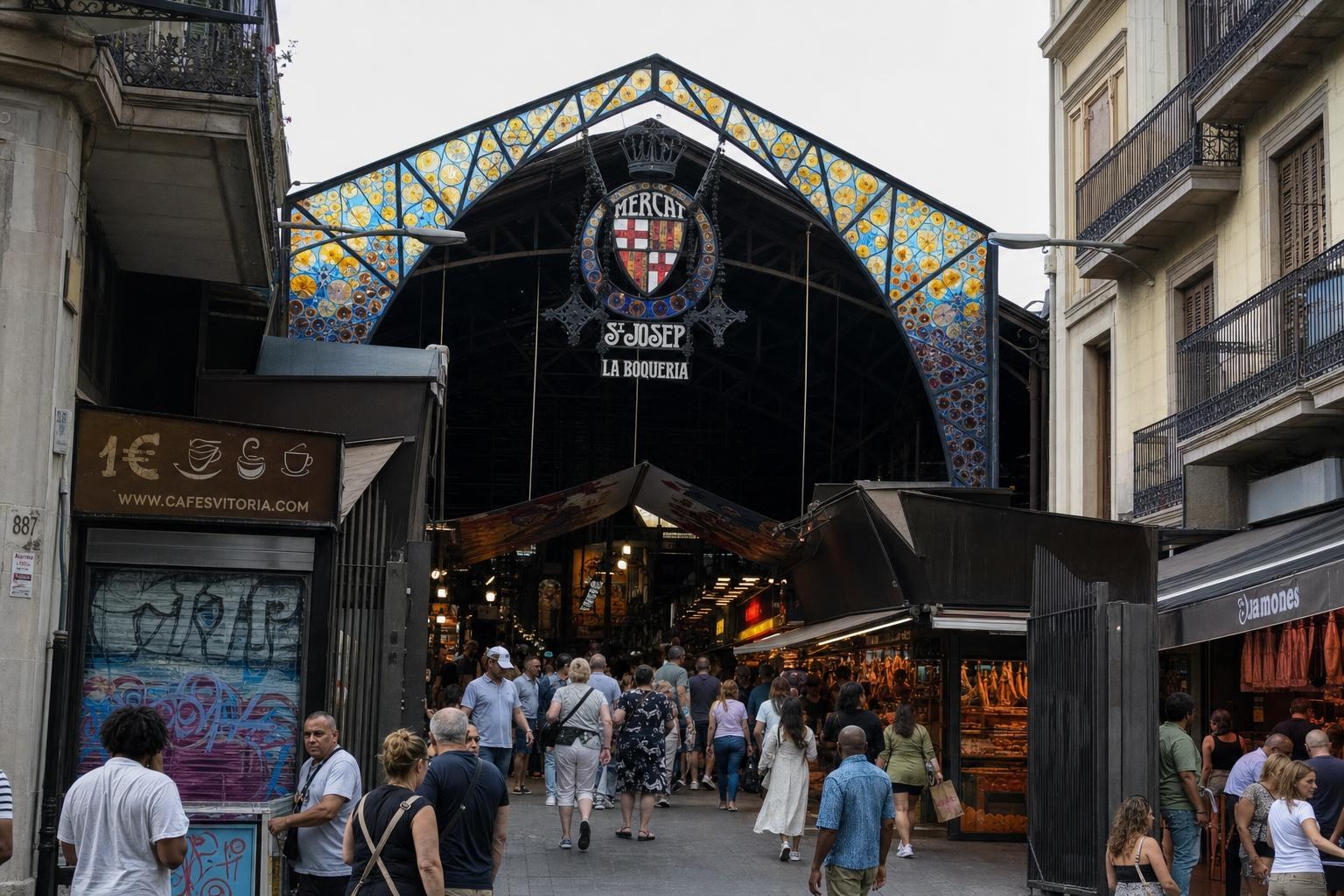
A. Mercat de la Boqueria (Mercat de Sant Josep)
Begin on the bustling La Rambla, where Mercat de la Boqueria stands as a symbol of the city’s food heritage. This covered public market is renowned for its vibrant atmosphere and the diversity of fresh produce, meats, seafood, and local specialties. Its centrality and historical significance make it a logical starting point for exploring Barcelona’s culinary heart (source: Turisme de Barcelona).
Though the exact vendor listings may shift and are not enumerated in official tourism references, the experience is anchored in navigating colorful stalls, sampling seasonal fruits, and trying classic Catalan small plates, such as bombas or bacalao dishes, from casual counters inside.
B. Walk to Mercat de Santa Caterina
Leaving La Boqueria, make your way (on foot, as recommended by official district guides) northeast towards Mercat de Santa Caterina, located in the Sant Pere area. Official tourism resources highlight Santa Caterina's distinct status in Barcelona’s market landscape, drawing attention to its modern undulating rooftop—a photogenic architectural marvel—as well as its blend of old traders and new culinary concepts.
Santa Caterina’s interior is a showcase for fresh Catalan and Mediterranean produce, where locals often shop for cheeses, charcuterie, fish, and seasonal vegetables. Market stalls sometimes share space with tapas bars and deli counters, offering opportunities to continue your tasting with small plates, pastries, or chargrilled seafood, depending on what’s available that day.
C. Continue to El Born Neighbourhood
From Santa Caterina, stroll east toward El Born, a lively historical quarter officially noted for its cluster of food venues, tapas spots, and cultural landmarks. While the modern Mercat del Born is now oriented toward archaeological exhibits, the surrounding El Born streets are described in tourism materials as a stronghold of culinary experiences and host seasonal food initiatives like the Mercat de Mercats festival (source: Turisme de Barcelona).
Here, visitors can explore cobbled streets lined with bars, specialty shops, and classic tapas establishments. Food-focused events and pop-ups sometimes use squares and venues across El Born, presenting further opportunities to sample Catalan cheeses, local wines, and inventive small plates when festivals are on.
Planning Your Route and Transport Logistics
Even though this route is primarily walkable, Barcelona’s public metro and bus network—coordinated by Transports Metropolitans de Barcelona (TMB)—provides practical access points at both ends of the circuit (sources: TMB journey planner and metro map).
- For the Boqueria Market, the closest metro station is Liceu (Line 3, Green Line), directly on La Rambla.
- Mercat de Santa Caterina is accessible from Jaume I (Line 4, Yellow Line) or Urquinaona (Lines 1 and 4); both are within walking distance.
- To return from El Born or begin your route there, Jaume I station is again the closest metro stop.
TMB’s journey-planning tools allow you to tailor your route, whether you arrive in Ciutat Vella via railway station connections or want to optimize metro or bus segments to suit your schedule. For those thinking about multiple journeys, the Hola Barcelona travel card is listed by TMB as a multi-ride ticket option for visitors.
Taste and Experience: What to Look For
- **Seasonal Produce**: At each market, seek out displays of fruits, vegetables, and local specialities that reflect the time of year.
- **Small Plates**: Many stalls and market bars offer classic Catalan tapas—think anchovies, bombas (potato croquettes), and charcuterie, as well as market-fresh seafood bites. As specific vendor inventories change regularly, check menus or blackboards at individual counters for current offerings.
- **Events & Festivals**: Barcelona’s official event calendar sometimes features gastro-fairs in or near El Born (such as Mercat de Mercats). Planning your route to coincide with a festival or tasting event can enrich your experience—details are updated on Turisme de Barcelona’s official site.
Practical Planning Advice
- Set out early, especially for La Boqueria, to enjoy the markets before peak crowds and to experience the freshest market action.
- If you want to maximize a small-plate focus, walk the loop at lunchtime, when market bars typically operate at their busiest and experiment with daily specials.
- Use the TMB journey planner (referenced below) to check the best metro or bus line connections and consider downloadable metro maps to familiarize yourself with central station exits and the market neighborhood geography.
- To incorporate a food event, monitor Turisme de Barcelona event listings and ensure dates and venues line up with your visit.
Key Points About Market Visits
While this itinerary offers an authentic slice of city life, exact stall rosters, menu items, and daily schedules can change and are not guaranteed by current official tourism pages; vendor-specific details must be confirmed on-site. For the most immersive experience, follow your senses and enjoy the spontaneity of discovery in these venerable Barcelona markets.
Key takeaways
- Ciutat Vella contains Barcelona’s three most iconic food markets and is perfect for a walkable tasting itinerary.
- La Boqueria, Santa Caterina, and El Born each offer distinct stalls, local flavours, and small-plate experiences.
- The route is effectively planned on foot, but central metro stations (Liceu, Jaume I, Urquinaona) link easily for arrival and departure.
- Seasonal food events and market-related festivals often take place in or near these neighbourhoods—consult Turisme de Barcelona for schedules.
- Stall and small-plate options vary day to day; follow your senses and explore what’s on offer during your visit.
Comparisons & planning
| Market / Area | Official Role | Location | Nearest Metro Station | Experience Highlights | Official Source |
|---|---|---|---|---|---|
| Mercat de la Boqueria | Principal historic food market | La Rambla, Ciutat Vella | Liceu (L3) | Vivid stalls, local produce, market tapas | Turisme de Barcelona |
| Mercat de Santa Caterina | Architectural covered market | Sant Pere / Santa Caterina | Jaume I (L4), Urquinaona (L1/L4) | Fresh produce, small-plate counters, iconic roof | Turisme de Barcelona |
| El Born neighbourhood | Food cluster & festival/events area | East Ciutat Vella | Jaume I (L4) | Tapas bars, market events, food streets | Turisme de Barcelona |
Travel checklist
- Check TMB’s official journey planner for metro or bus access to Ciutat Vella markets.
- Start early to experience La Boqueria before the lunch rush.
- Walk from La Boqueria to Santa Caterina to El Born for a logical tasting route.
- Sample small plates, seasonal produce, and tapas at market counters and bars.
- Consult Turisme de Barcelona for food festival or market event dates within the area.
- Be flexible—specific stall offerings and operating hours are not fixed and should be checked on site.
Frequently asked questions
What makes Ciutat Vella a good area for a market walk?
Ciutat Vella groups three major food destinations—La Boqueria, Santa Caterina, and El Born—within easy walking distance. Official tourism sources highlight this district as ideal for exploring local flavours and culinary heritage on foot.
How do I find the best public transport connections for this route?
Use the Transports Metropolitans de Barcelona (TMB) journey planner to check up-to-date metro and bus routes. Liceu, Urquinaona, and Jaume I stations all serve the Ciutat Vella market cluster.
Does La Boqueria or Santa Caterina guarantee specific small-plate vendors?
Official tourism sources do not provide confirmed daily vendor or menu lists. The market experience varies—expect to find classic Catalan small plates, but confirm on-site for current offerings.
Are there food festivals or events along this itinerary?
Yes, Turisme de Barcelona lists food festivals (like Mercat de Mercats) and culinary events that often take place in or around El Born or Ciutat Vella markets. Check the official event calendar before your visit.
Sources and research notes 2 sources
Based on official source material. Check provider websites for changing visitor details.
Conversation
Sign in or create an account to join the conversation.