Destinations
Shelter & Stroll: Rainproof Paris — Covered Passages, Major Museums and Underground Routes in Paris, France
Discover how to enjoy Paris, France, even on rainy days by exploring historic covered passages, major indoor museums, and sheltered metro routes. This practical guide clusters the city’s iconic passages and cultural landmarks into scenic, rainproof itineraries through central Paris.
AI illustration · Wardhead AI · AI-generated illustration
Shelter & Stroll: Rainproof Paris — Covered Passages, Major Museums and Underground Routes in Paris, France
Paris, France is best known for open-air cafés and grand boulevards. But when the rain falls or skies are uncertain, the city’s unique network of 19th-century covered passages—glass-roofed promenades filled with shops and timeless charm—offers inviting, rainproof alternatives. These passages, clustered in the heart of Paris, link naturally with celebrated museums, grand department stores, and the city’s extensive underground metro system. Here’s how you can design a seamless, largely indoor “shelter-and-stroll” day in Paris, moving from gallery to museum to marvel—while staying dry.
What Are Paris’s Covered Passages?
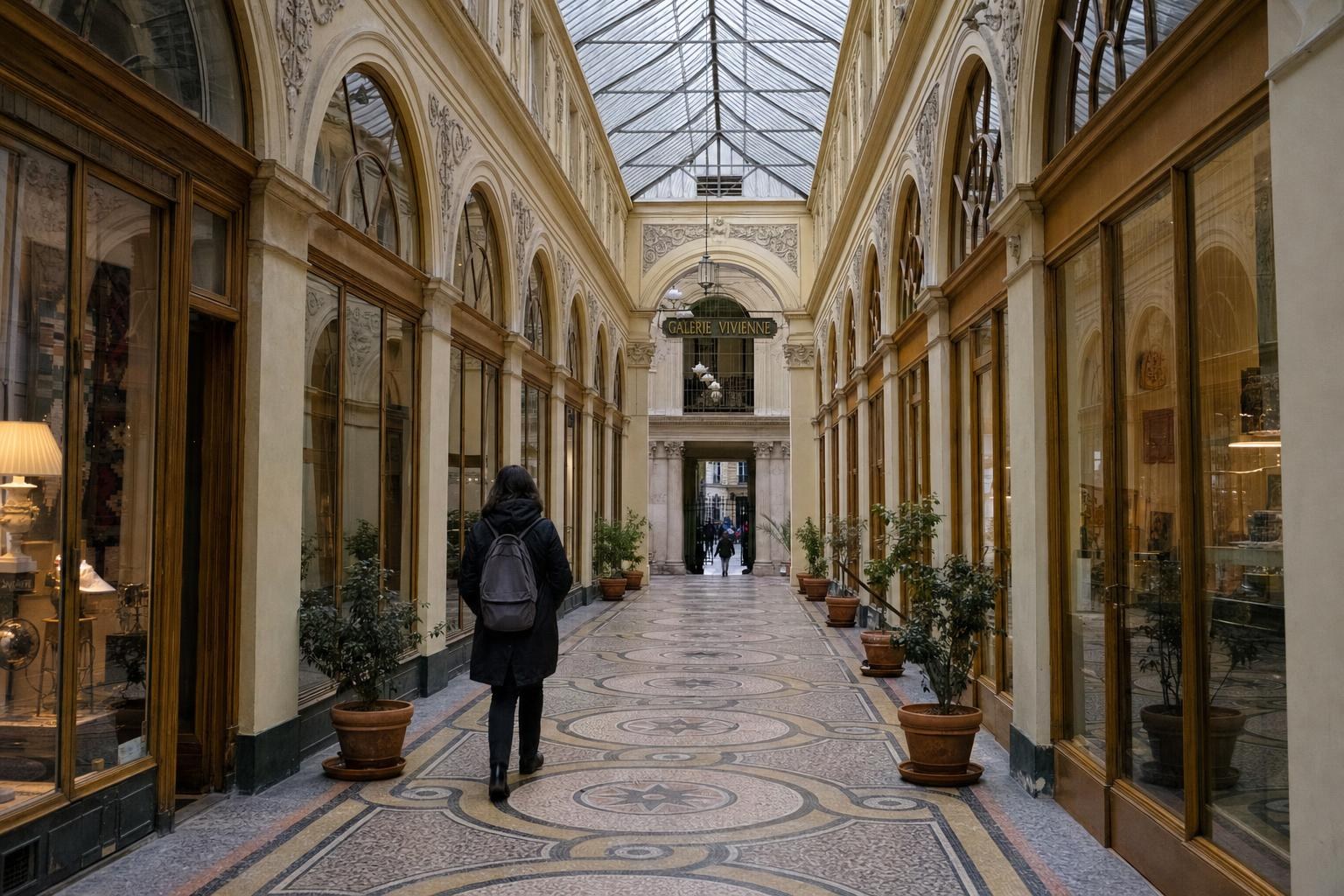
The covered passages (galeries/passages couverts) of Paris, France are sheltered, pedestrian arcades built from the late 18th to the 19th century, famed for their iron-frame glass roofs, mosaic floors, and sense of a Paris belonging to a different era. Today about 20 remain, concentrated mainly between the Grands Boulevards and Palais-Royal districts. Many are heritage sites—protected both for their architecture and the slice-of-life shops and cafés inside. Official city and destination resources group these passages as walkable circuits, especially enjoyed on rainy days.
Geographic Clusters: Grouping Passages for Rainproof Routes
To maximise your time under cover and reduce outdoor exposure, focus on these main clusters:
- Grands Boulevards / Opéra Cluster:
- **Passage des Panoramas**: The oldest surviving covered arcade (built 1799), noted for vintage charm, stamp and postcard shops, and cozy bistros.
- **Passage Jouffroy**: Directly adjoining Panoramas, it features a beautiful glass roof, old-world toy shops, and access to the Musée Grévin.
- **Passage Choiseul**: A slightly longer passage with boutiques and eateries, close to Opéra and theatre venues.
This trio creates a nearly continuous indoor stroll, directly connected to multiple metro lines (e.g., Grands Boulevards, Richelieu-Drouot, Opéra)—ideal for rainy-day navigation.
- Palais-Royal / Louvre Cluster:
- **Galerie Vivienne**: Celebrated for its neoclassical décor and mosaic floors, housing stylish shops and tea rooms.
- **Galerie Véro-Dodat**: Known for vintage appeal and boutique galleries, a short walk from the Louvre and Palais Royal.
- **Cloître des Billettes**: A small covered cloister (arcaded courtyard), now hosting shops and regular exhibitions.
These passages pair conveniently with the Louvre Museum for a rainproof loop in the central 1st and 2nd arrondissements.
- Haussmann / Grands Magasins Cluster:
- Famous Paris department stores—**Galeries Lafayette** and **Printemps**—are monumental covered shopping spaces just north of the passages, with elaborate domes and multi-level galleries. The area reinforces Paris’s long history of indoor shopping culture.
Other noteworthy passages (for those wishing to branch out) include:
- **Passage du Grand-Cerf**: Renowned for soaring ceilings and craft shops.
- **Passage Verdeau**: Home to antiquarian book and camera dealers, linking easily with Passage Jouffroy.
Major Indoor Cultural Anchors
Pair your stroll with an iconic, rainproof indoor experience:
- **Musée du Louvre** (Paris, France): One of the world’s great museums sits at the heart of sheltered passages. Louvre visitor regulations mention the availability of cloakrooms and lockers, making it easy to visit even with wet outerwear or umbrellas. If you are planning a museum-heavy day, check practical rules on the official Louvre website for current arrangements.
- **Department Stores**: Beyond shopping, Paris’s grand magasins offer indoor food halls, panoramic terraces sheltered from the rain, and architectural spectacles.
- **Family-Friendly Museums**: Musée Grévin (inside Passage Jouffroy) offers waxwork art, ideal for those traveling with children.
- **Underground Paris**: For those interested in the mysterious side of the city, Paris je t’aime recommends the Catacombs and specialty sites like the Musée des égouts (Paris Sewer Museum), both offering unique, entirely sheltered experiences. Availability may vary, so current official websites should be checked.
Navigating Underground: Metro & RATP Correspondence
Paris’s metro and RER network is well-suited to wet weather. RATP guidance explains that a single ticket covers most transfers within the controlled area—so you can ride, transfer lines, or change between subway and RER trains without needing to surface if you plan routes carefully. Not all interchange corridors are underground, but the essential passages and clusters above are generally within a short, sheltered walk or a direct indoor connection from major metro stations.
Some of the most historic stations (e.g., Opéra, Châtelet, Grands Boulevards) have impressive covered concourses and underground corridors. RATP resources and network maps are recommended for route planning.
Planning a Shelter & Stroll Route: Sample Sequence
Here is a practical, suggested combination for a rainproof day in central Paris:
**Morning:**
- Enter the Grands Boulevards area via the metro (Grands Boulevards or Richelieu-Drouot stations).
- Walk through Passage des Panoramas (browse the shops and cafés).
- Move seamlessly into Passage Jouffroy (visit the Musée Grévin if desired).
- Exit into Passage Verdeau for antique browsing or backtrack to join the boulevard.
**Midday:**
- Take the metro from Grands Boulevards/Opéra to Palais Royal–Musée du Louvre (lines 7/8), remaining underground between stations.
- Stroll through Galerie Vivienne and Galerie Véro-Dodat, enjoy tea or a light lunch in these surroundings.
**Afternoon:**
- Enter the Louvre Museum for several hours of world-class art under the glass pyramid (cloakrooms are available for wet clothing and umbrellas).
**Alternative:** For shopping or further indoor browsing, transfer by metro (always using underground corridors where possible) to Boulevard Haussmann for the famous grands magasins (Galeries Lafayette, Printemps).
**Evening or rainy day extension:**
- Visit the Catacombs or the Sewer Museum (subject to opening; check official websites in advance), both of which offer a contrast to the city’s glittering arcades.
Additional Rainproof Tips
- Use RATP’s station maps to plan transfers with minimal outdoor walking.
- The passages can be crowded during peak times; early morning or late afternoon sees fewer visitors.
- Always confirm which passages and museums are open on your chosen day, as some houses or shops close on weekends or holidays.
- For precise access details and current exhibits, check official Paris destination websites listed below.
Conclusion
Even when it rains, Paris, France offers a classic city experience—indoors. By combining covered passages, world-class museums, and department store architecture, visitors can enjoy a day of exploration and culture entirely sheltered from the weather. With a little planning, you need never let rain spoil your Parisian adventure.
Key takeaways
- Paris, France’s covered passages provide scenic, rainproof walking circuits in central neighbourhoods.
- Most passages are clustered near the Grands Boulevards and Palais-Royal adjacent to museums and department stores.
- Major museums such as the Louvre and nearby passages can be combined for all-day indoor exploration.
- RATP metro and RER transfer rules allow for mostly underground route planning between clusters.
- Grands magasins (department stores) like Galeries Lafayette offer expansive shopping and shelter alongside historic passages.
- The Catacombs and underground museums are unique options for rainy-day Paris adventures.
- Always consult official passage, museum, or transport sites for current opening status.
- Mapping clusters reduces outdoor exposure and maximises covered sightseeing in Paris.
Comparisons & planning
| Passage/Gallery | Main Features | Nearest Metro Stop | Related Indoor Anchor | Neighbourhood | Official Resource |
|---|---|---|---|---|---|
| Passage des Panoramas | Vintage shops, bistros | Grands Boulevards | Passage Jouffroy, Musée Grévin | Grands Boulevards | Paris je t’aime |
| Passage Jouffroy | Glass roof, toy shops | Grands Boulevards | Musée Grévin | Grands Boulevards | Paris je t’aime |
| Passage Choiseul | Boutiques, eateries | Quatre-Septembre/Opéra | Théâtres | Opéra | Paris je t’aime |
| Galerie Vivienne | Neoclassical, mosaic floors | Bourse/Palais Royal–Musée du Louvre | Louvre Museum | Palais-Royal | Paris.fr |
| Galerie Véro-Dodat | Boutiques, art galleries | Palais Royal–Musée du Louvre | Louvre Museum | Louvre | Paris je t’aime |
| Passage du Grand-Cerf | Tall iron glasswork, crafts | Étienne Marcel | Rue Saint-Denis cluster | Montorgueil | Paris.je t’aime |
Travel checklist
- Identify your preferred passage cluster (Grands Boulevards, Palais-Royal, Haussmann).
- Check official pages for passage and museum open status.
- Plan metro routes using RATP indoor transfer corridors.
- Pair passage walks with at least one major museum or department store visit.
- Bring a foldable umbrella and waterproof clothing for surface stretches.
- Arrive early in passages to avoid heavy crowds.
- Confirm cloakroom/locker rules at major museums (e.g., Louvre).
- Consult updated RATP maps for station renovation and corridor access.
Frequently asked questions
Where are most of Paris’s covered passages located?
Most historic covered passages (galeries/passages couverts) in Paris, France are concentrated around the Grands Boulevards, Opéra, and Palais-Royal/Louvre districts. These central clusters allow visitors to combine multiple passages, major museums, and indoor attractions with minimal exposure to the elements.
How can I move between passage clusters without getting wet?
The Paris metro (RATP) network allows for many underground transfers; using stations like Grands Boulevards, Opéra, and Palais Royal–Musée du Louvre, you can move between passage clusters and main museums primarily indoors. Plan routes using official RATP maps.
Do the passages in Paris have regular opening hours?
Official city and tourism resources describe the passages as open pedestrian spaces, but individual shops, cafés, and galleries within each passage may keep independent hours. It’s advisable to check current details on official Paris or passage-specific web pages before your visit.
What indoor anchors pair well with the passages for a rainy-day itinerary?
Major museums such as the Louvre, grands magasins like Galeries Lafayette and Printemps, and unique sites such as the Catacombs or Musée Grévin pair naturally with covered passage strolls for comprehensive indoor exploration of Paris, France.
Sources and research notes 5 sources
Based on official source material. Check provider websites for changing visitor details.
Conversation
Sign in or create an account to join the conversation.