Destinations
Quiet Circuits of Sacred Osaka: Visiting Sumiyoshi Taisha, Shitennoji, and Namba’s Urban Shrines Respectfully
Explore Osaka’s spiritual heart through three clusters of historic shrines and temples: Sumiyoshi Taisha in southern Osaka, Shitennoji in Tennoji, and urban gems amid Namba’s bustling streets. Learn key highlights, the surrounding neighborhoods, and practical planning tips for a meaningful, respectful visit.
AI illustration · Wardhead AI · AI-generated illustration
Osaka, Japan, is best known for its lively markets and neon-lit streets, but at its core are centuries-old sacred sites offering moments of quiet and meaning. For travelers and writers seeking to understand and convey Osaka’s spiritual traditions, three key clusters stand out: Sumiyoshi Taisha in the south, Shitennoji in Tennoji, and the compact shrines scattered through Namba. This guide organizes practical, source-based advice for visiting each respectfully, drawing exclusively on official Osaka tourism authority material.
Sumiyoshi Taisha: Head Shrine of Maritime Tradition
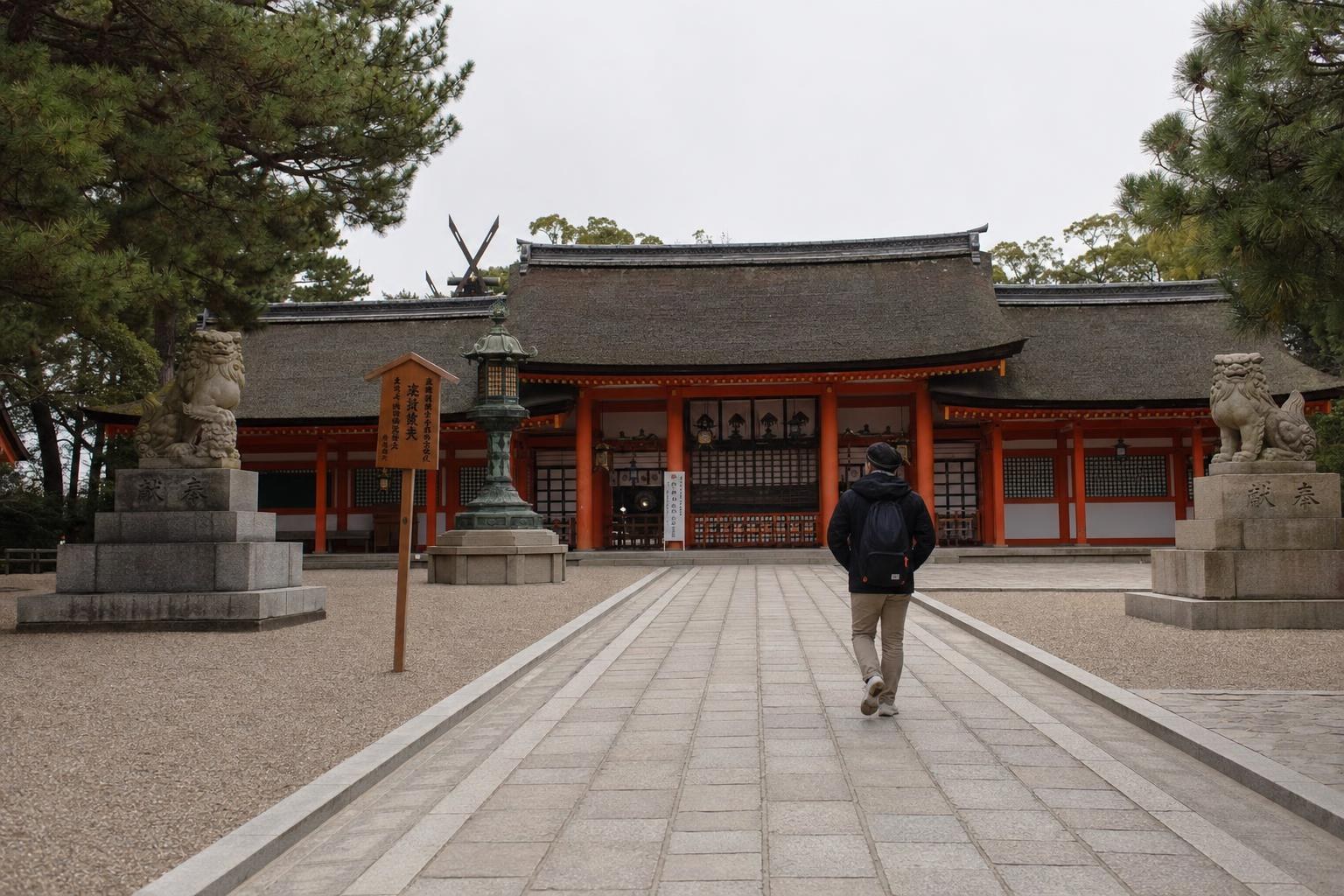
Sumiyoshi Taisha, located in the Sumiyoshi-ku of southern Osaka, has stood for about 1,800 years as a guardian of maritime safety and a center for seasonal ritual. It is head shrine for more than 2,300 Sumiyoshi shrines across Japan. Official sources highlight its unique "Sumiyoshi-style" architecture—straight-roofed and ancient in form—alongside striking features such as the arched Sorihashi Bridge and a precinct rich in ceremonial spaces and cultural heritage. The site is particularly renowned for hosting massive New Year's (Hatsumode) pilgrimages, drawing over two million worshippers in the first three days each January, and for rituals like the Unoha, which commemorates its founding.
Arriving at Sumiyoshi Taisha is straightforward. Visitors typically use either the Hankai Tramway (disembarking at Sumiyoshi-Toriimae Station) or the Nankai Railway (Sumiyoshi Taisha Station). Osaka’s official guides recommend these lines as the main access routes, and many maps show well-marked walking paths from both stations to the shrine. The approach via tram or rail is itself part of Osaka’s historical cityscape, offering glimpses into quieter neighborhoods of the city.
Within the shrine grounds, visitors will find multiple halls, National Treasures, and Important Cultural Properties. However, the official tourism pages do not publish a specific etiquette checklist or operational rules for visitors—so as a matter of best practice, make note of signage on-site concerning conduct and restricted areas, especially during busy or festive periods.
Shitennoji: The Oldest State-Sponsored Buddhist Temple
Travel north to the Tennoji and Abeno district, and you’ll find Shitennoji, widely cited as the first Buddhist temple established by the state in Japan. Founded by Prince Shotoku around 1,400 years ago, it was intended as a center for peace and Buddhist teaching. The temple complex reflects an early, ordered approach to temple layout, featuring reconstructed main gates, a five-story pagoda, and a beautiful garden. The site’s treasure house and museum display important artifacts, including National Treasures and Important Cultural Properties described on Osaka’s official pages.
Accessing Shitennoji is easiest by train or subway, with Tennoji Station and Shitennoji-mae Yuhigaoka Station both positioned nearby. Official Tennoji area maps show that the temple is a short walk from these stations, acting as a focal point of a larger neighborhood cluster that includes parks, shopping areas, and other historical sites.
Osaka’s tourism resources highlight Shitennoji’s commemorative rituals and seasonal events as central to the city’s calendar. When visiting, remember that official tourism materials do not enumerate house rules or specific etiquette; therefore, defer to posted guidance at the site and respect spaces designated for worship or quiet reflection.
Namba’s Urban Shrines: Sacred Spaces Among Skyscrapers
The Namba and Shinsaibashi neighborhoods pulse with commercial energy, but amidst the shops and nightlife, urban shrines offer oasis-like tranquility. Two stand out by official designation:
- Namba Yasaka Shrine: Known for its enormous lion-head stage (a rare and dramatic feature), this shrine is described in official guides as both a “power spot” and a central site for local rituals and festivals. Its dramatic appearance and close integration with surrounding city life make it a favorite short stop for writers and travelers seeking a sense of living urban spirituality.
- Namba Jinja (Namba Shrine): With a history stretching back to the 16th century and several relocations, Namba Jinja is a more understated but equally historical site. It sits tucked into the urban grid, offering a quick retreat for quiet or reflective moments within view of department stores and entertainment streets.
Both shrines are readily accessible by foot from Namba or Shinsaibashi stations, with official guides detailing the easy pedestrian access. These urban shrines, more compact than their southern or northern counterparts, maintain a sense of continuity with Osaka’s past amid its modern development.
Neighborhood Groupings and Itinerary Planning
For a coherent, respectful visit—whether you’re a travel writer outlining a circuit or a visitor building a custom route—Osaka’s sacred sites are best experienced in small, neighborhood-based circuits:
- Sumiyoshi / Southern Osaka: Focus on Sumiyoshi Taisha, accessible by Nankai or Hankai lines, and consider exploring nearby shrines—transport and approach routes are clearly described on official city maps.
- Tennoji / Abeno District: Group Shitennoji with Tennoji Park, local museums, and the busy Tennoji station area; the circuit is easily walkable and well-served by public transport.
- Namba / Shinsaibashi: Stroll between Namba Yasaka Shrine, Namba Jinja, and adjacent urban attractions—all are within a short walk of the Namba transport hub.
Official city guides repeatedly recommend using the extensive public transport network—Osaka Metro, JR, Nankai, and the Hankai Tramway—for reliable and stress-free movement between these clusters. This approach allows for flexible planning and lessens the environmental impact of visits.
When to Go, What to Expect
Sumiyoshi Taisha’s New Year period (Hatsumode) is the busiest time, with crowd levels among the highest of any shrine in the region. Shitennoji also features prominent, well-attended commemorative events in its annual calendar. For solitude and reflection, consider weekday mornings or periods outside major festivals. If your interests include artifact or museum visits at either Sumiyoshi Taisha or Shitennoji, consult their event calendars and museum exhibit schedules via official tourism pages first—specific timings and ticketing details are not provided on the summary pages and will require direct checking.
What Official Sources Do Not Supply: Etiquette, Admission, and Rules
None of the official Osaka city or shrine/temple spot pages reviewed supply a comprehensive, site-specific visitor code of conduct, list of restricted areas, or rules on photography, food, or clothing. For any writer or visitor needing those details, consult either each individual shrine or temple’s home page (if available), or observe all posted signage and instructions upon arrival. Avoid making assumptions about access, ritual participation, or behavior based on generalizations—what is permitted at one site may not be allowed at another.
Conclusion
Osaka’s sacred sites—Sumiyoshi Taisha in the south, Shitennoji anchoring Tennoji, and the compact but lively shrines of Namba—offer a tangible connection to the city’s layered spiritual and cultural identity. By organizing your journey around geographic clusters and confirming details on-site or via dedicated shrine or temple sources, you support meaningful, respectful tourism that honors both Osaka’s traditions and its evolving urban landscape.
Key takeaways
- Osaka’s sacred sites are best visited by focusing on three regional clusters: Sumiyoshi Taisha, Shitennoji, and Namba’s urban shrines.
- Official city guides highlight easy access via public transport: Nankai, Hankai Tramway, Osaka Metro, and JR lines serve all site clusters.
- Sumiyoshi Taisha is the head of Japan’s Sumiyoshi shrines, with distinctive architecture and major New Year events.
- Shitennoji is Japan’s oldest state-sponsored Buddhist temple, easily accessed in the Tennoji area, and features a prominent treasure museum.
- Namba’s urban shrines—including Namba Yasaka and Namba Jinja—offer cultural depth within Osaka’s commercial core.
- Official tourism pages do not provide detailed etiquette; check shrine or temple websites or onsite for up-to-date visitor guidelines.
Comparisons & planning
| Site | Religious Affiliation | Age (approx.) | Neighborhood | Major Access | Distinctive Features |
|---|---|---|---|---|---|
| Sumiyoshi Taisha | Shinto | 1,800 years | Sumiyoshi-ku, South Osaka | Nankai/Hankai lines | Sumiyoshi-zukuri architecture, Sorihashi Bridge, New Year events |
| Shitennoji | Buddhist | 1,400 years | Tennoji | JR, Osaka Metro (Tennoji), Shitennoji-mae Yuhigaoka | Classic temple layout, treasure museum, seasonal rituals |
| Namba Yasaka Shrine | Shinto | Centuries (exact unclear) | Namba | Osaka Metro, Namba Station | Giant lion-head stage, local festivals |
| Namba Jinja | Shinto | Since 1583 (relocated) | Shinsaibashi/Namba | Osaka Metro, Namba Station | Urban oasis, historical continuity with city’s growth |
Travel checklist
- Group sites by neighborhood cluster for efficient visits: Sumiyoshi, Tennoji, or Namba.
- Use public transport for access: Nankai/Hankai (Sumiyoshi), JR/Osaka Metro (Tennoji/Abeno), Osaka Metro (Namba).
- Consult local signage and official shrine/temple websites for current etiquette or restrictions.
- Plan New Year’s visits to Sumiyoshi Taisha or Shitennoji with crowd levels in mind.
- Check museum or treasure exhibit calendars for Shitennoji and Sumiyoshi Taisha.
- Prepare for urban walking—shrines in Namba are closely integrated with commercial areas.
Frequently asked questions
How do I reach Sumiyoshi Taisha by public transport?
Sumiyoshi Taisha is easily accessed via either the Nankai Railway (Sumiyoshi Taisha Station) or the Hankai Tramway (Sumiyoshi-Toriimae Station), with official tourism guides recommending these as the main gateways to the shrine.
Are there specific visitor etiquette rules for Osaka’s shrines and temples?
Official Osaka tourism pages do not publish detailed, site-specific codes of conduct. Visitors are advised to consult onsite notices and each shrine or temple’s own official webpages for guidance on etiquette, photography, and restricted areas.
What is the best time to visit Sumiyoshi Taisha or Shitennoji to avoid crowds?
Both are busiest during major festivals—Sumiyoshi Taisha in particular during the first three days of January for Hatsumode. For a quieter experience, visit on weekday mornings and outside main event periods.
Can I visit multiple shrine or temple sites in a single day?
Yes. Osaka’s public transport system makes it practical to group visits by neighborhood cluster: focus on Sumiyoshi, Tennoji (Shitennoji), or Namba in sequence using JR, Osaka Metro, Nankai, or Hankai lines for efficient transfers.
Sources and research notes 2 sources
Based on official source material. Check provider websites for changing visitor details.
Conversation
Sign in or create an account to join the conversation.