Destinations
Market-to-Monti: Experiencing Rome’s Markets and Independent Shops
Explore Rome’s vibrant markets and independent shopping streets, from the historic Campo de’ Fiori and lively Porta Portese flea market to the creative Monti district. This factual guide walks you through distinct neighbourhood experiences that capture both the city’s daily rhythms and its creative retail spirit.
AI illustration · Wardhead AI · AI-generated illustration
Rome, Italy, is a city where market life and independent shops are woven into the urban fabric, offering travellers a unique way to engage with both tradition and modern creativity. Beyond the grand monuments, Rome’s central neighbourhoods pulse with open-air markets, eclectic flea stalls, and pockets of creative retail. This guide traces a route through three source-verified essentials—Campo de’ Fiori, Porta Portese, and Monti—that give travellers direct access to Rome’s everyday life and artisanal flair.
Historic Start: Campo de’ Fiori and Its Surroundings
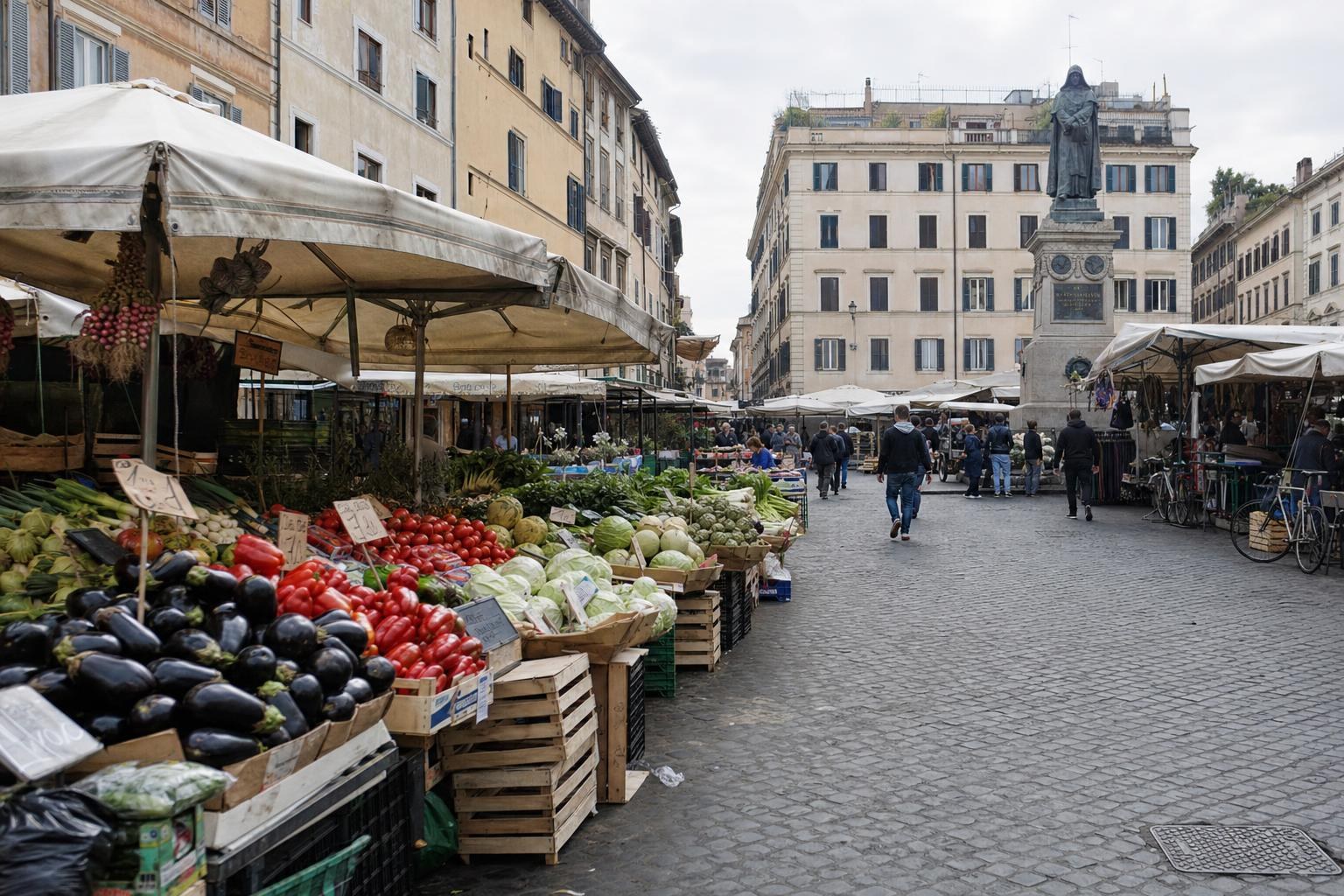
Begin your exploration at Campo de’ Fiori, one of Rome’s most historic and picturesque market squares as officially described by Turismoroma. Centrally located between Piazza Navona and Piazza Farnese, this open-air market is renowned for colourful fruit, fresh produce, and flowers. According to official tourism sources, Campo de’ Fiori has served as a commercial and social hub since the 19th century, representing a living tradition in the very heart of Rome. The lively daytime activity offers a snapshot of the city’s culinary culture and rhythms, as both locals and visitors gather to shop and connect.
Just beyond the central square, the area unfolds into a network of artisan and retail-filled lanes. Official city itineraries highlight Via dei Giubbonari, Via dei Chiavari, Via dei Balestrari and Via dei Baullari as streets where small workshops, historic trades, and independent boutiques cluster. These surrounding lanes extend the market atmosphere and enable visitors to browse historic craft shops, tailors, and vintage stores tucked into centuries-old buildings. This environment delivers an authentic immersion in daily Roman life, inviting exploration beyond the main square.
Porta Portese: Rome’s Iconic Sunday Flea Market
A distinctive Sunday experience awaits at Porta Portese—Rome’s largest and arguably most celebrated flea market. Officially located just outside the ancient Porta Portese gate in the Trastevere area, the market stretches along Via Portuense and Viale di Trastevere. According to Turismoroma, the flea market transforms multiple streets into a vast bazaar, attracting both locals and adventurous visitors.
Stalls at Porta Portese offer an eclectic mix—second-hand clothing, vintage accessories, records, books, bicycles, and a wide range of bric-à-brac. Both new and used goods are found here, giving the market a reputation as a Sunday ritual for treasure hunters and casual browsers alike. The official site positions Porta Portese as a central feature of Trastevere’s weekend character, connecting Rome’s love of markets with neighbourhood tradition.
Monti: Hub of Independent Designers and Vintage Shopping
For a glimpse into Rome’s creative side, head to Monti, an inner-city district officially recognized by Italia.it as a leading destination for those seeking small designers and vintage flair. Streets like Via del Boschetto, Via dei Giubbonari (extending from Campo de’ Fiori), and Via del Governo Vecchio are repeatedly cited as retail pockets where originality thrives. In Monti, visitors encounter designer-run workshops, local labels, and unique second-hand boutiques—a contrast to the more formal luxury avenues of central Rome.
The concentration of independent stores and consignment shops in Monti and adjacent lanes is ideal for travellers interested in Roman bohemian style, authentic finds, and supporting local makers. Italia.it underscores that these areas showcase Rome’s identity as a city of both tradition and innovation—with each shop and atelier offering something different from what you’ll find on flagship shopping streets.
Connecting the Clusters: Walkability and Urban Context
Official tourism itineraries confirm that Campo de’ Fiori, its surrounding shopping lanes, and Piazza Navona are tightly interwoven, making it easy to traverse these highlights on foot. From Campo de’ Fiori, visitors can also plot a realistic route heading south-west—on foot or by public transit (with additional planning, as official operator details are not included in the evidence)—to reach Trastevere and the Porta Portese market for Sunday browsing.
Monti, while a separate neighbourhood from Campo de’ Fiori, is also centrally placed and accessible by a short walk or transit connection. Together, these clusters provide an authentic cross-section of Rome: the daily vibrancy of produce markets, the spectacle of a sprawling flea market, and the evolving style of independent designers.
Market Life as a Lens on Rome’s Identity
The official perspective, as highlighted in Rome’s tourism materials, positions markets not just as shopping venues but as the backbone of neighbourhood identity. Places like Campo de’ Fiori and Porta Portese serve as crucial spaces where commerce, culture, and community converge. Engaging with these markets allows travellers to witness real Roman traditions in action and to experience the evolving rhythm of the city alongside local residents.
Practical Planning Details (as supported by official evidence)
- Campo de’ Fiori operates as a market in the mornings, especially lively on weekdays, while Porta Portese is strictly a Sunday event.
- Artisan and vintage shops in Monti and adjacent streets typically keep standard retail hours; individual timings may vary and are not listed in the official sources.
- All the areas described involve traditional cobblestone streets, typical of Rome’s historic centre. Walking between locations exposes visitors to a blend of architectural sights and neighbourhood piazzas.
- For the most up-to-date transport information, visitors are advised to consult official municipal or transit operator websites, as specific route details were not provided in the official tourism pages reviewed.
In summary, Rome’s Market-to-Monti route lets visitors navigate genuine neighbourhood experiences—starting from iconic fresh produce markets, detouring into the city’s premier flea scene, and culminating in the creative energy of independent boutiques. Each stop, as verified by official sources, forms a key thread in the rich tapestry of Roman life.
Key takeaways
- Campo de’ Fiori is a historic central square with a vibrant daily market, offering insight into Rome’s food traditions.
- Surrounding lanes near Campo de’ Fiori host artisan workshops, tailors, and independent boutiques in a classic Roman setting.
- Porta Portese is Rome’s principal flea market, active on Sundays in the Trastevere area, featuring a vast assortment of new and used goods.
- Monti and nearby central streets offer a dense concentration of vintage and independent designer shops, ideal for unique finds.
- Official tourist itineraries highlight that these areas are walkably connected within Rome’s city centre.
- Markets in Rome function as important community and cultural spaces, not just tourist attractions.
Comparisons & planning
| Name | Type | Officially Cited Location | Key Features | Neighbourhood | Frequency |
|---|---|---|---|---|---|
| Campo de’ Fiori | Produce Market | Between Piazza Navona & Piazza Farnese | Historic daily market, flowers, fruit, local vendors | Centro Storico | Daily (morning) |
| Porta Portese | Flea Market | Outside Porta Portese gate, Via Portuense & Viale di Trastevere | Largest Roman flea market; new and used goods, Sunday only | Trastevere | Sunday |
| Monti/Via del Boschetto | Independent/Vintage Shops | Monti district, Via del Boschetto, Via dei Giubbonari, Via del Governo Vecchio | Designer workshops, vintage stores, local makers | Monti / Near Campo de’ Fiori | Standard retail hours |
Travel checklist
- Start at Campo de’ Fiori in the morning for a classic produce market experience.
- Explore the narrow artisan-filled streets (Via dei Giubbonari, Via dei Chiavari, etc.) adjacent to the piazza.
- If visiting on Sunday, schedule time for Porta Portese flea market in Trastevere.
- Browse Monti district for independent designers, vintage and second-hand shops.
- Wear comfortable shoes to navigate cobbled lanes and market crowds.
- Check official municipal or transit operator sites for updated travel connections between neighbourhoods.
Frequently asked questions
What is the best time to visit Campo de’ Fiori market?
Campo de’ Fiori operates as a daytime produce market, especially vibrant in the mornings, according to official Rome tourism sources.
Where is Porta Portese market located?
Porta Portese flea market is held just outside the Porta Portese gate in the Trastevere area, extending along Via Portuense and Viale di Trastevere.
What makes Monti a special shopping district?
Monti stands out for its cluster of independent designers, vintage stores, and second-hand boutiques, offering distinctive finds in a creative urban setting.
How do I travel between these areas in Rome?
The official tourism sources confirm these areas are centrally located and walkable. For public transit connections, consult Rome’s municipal or operator websites, as specific lines are not provided in the evidence.
Sources and research notes 2 sources
Based on official source material. Check provider websites for changing visitor details.
Conversation
Sign in or create an account to join the conversation.