Destinations
Madrid’s Paseo del Arte and Retiro Cluster: A Walkable Route Linking Prado, Reina Sofía, and El Retiro’s Landmarks
Discover how Madrid’s world-renowned Paseo del Arte and the historic expanse of El Retiro Park form a unique walkable cultural landscape. This practical guide walks you through the must-see art museums, iconic park monuments, and key transport points, helping you plan a focused cultural day in the Spanish capital.
AI illustration · Wardhead AI · AI-generated illustration
Madrid, Spain’s capital, offers visitors a cultural corridor unlike any other in Europe: the Paseo del Arte and the adjacent Parque del Buen Retiro. Declared a UNESCO Cultural Landscape in 2021, this zone unites world-class museums, iconic architecture, and expansive green spaces in the heart of the city. This guide outlines a focused route connecting the celebrated Museo del Prado, the Reina Sofía National Art Centre, and the landmark monuments of El Retiro—providing practical advice for a seamless cultural experience.
What Is the Paseo del Arte and Retiro Cluster?
The Paseo del Arte (“Art Walk”) extends along Madrid’s historic Paseo del Prado, running between Plaza de Cibeles and Atocha, and is embraced by the Jerónimos neighbourhood and El Retiro’s lush promenades. Together, these areas represent the epicentre of Madrid’s artistic life, home to three of Spain’s most important art museums, along with sculptural promenades and grand architectural ensembles. The entire stretch, including El Retiro’s 118–125 hectares of gardens and water features, is officially promoted as a single, walkable visitor landscape (esmadrid.com).
Why Focus on This Route?
Official city and national tourism sources present the Prado–Retiro “Art Walk” as an integrated experience. The museums and park are linked not just geographically but also culturally, making it easy for visitors to move on foot or by bike between masterpieces of classic art, contemporary exhibitions, and historic urban nature. Recognizing this allows you to group your Madrid highlights efficiently, making the most of a short stay.
A Step-by-Step Walkable Itinerary
Morning: Museo Nacional del Prado and Paseo del Prado
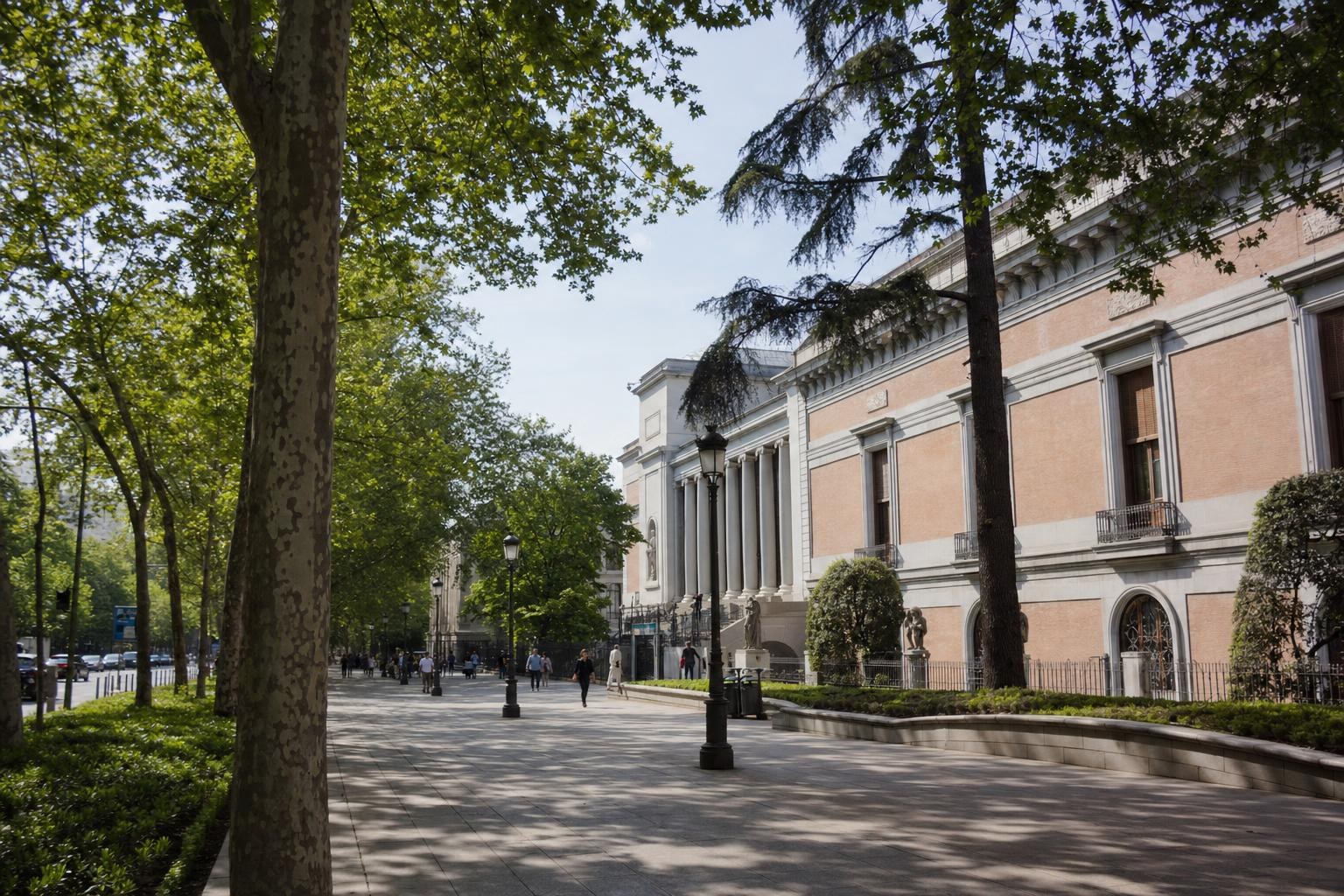
Begin your visit at the Museo Nacional del Prado, Madrid’s flagship art museum. Officially described as the “crown jewel” of Spanish fine art collections, the Prado showcases masterpieces from Velázquez, Goya, El Greco, and major holdings in Italian and Flemish painting. Official sources recommend starting here for its central cultural role (esmadrid.com; spain.info). The main entrance is on Paseo del Prado, just north of Plaza de Cánovas del Castillo (Neptuno fountain). Metro stations Banco de España (Line 2) and Estación del Arte (Line 1) provide direct access, with BiciMAD bike stations also listed nearby (esmadrid.com).
Outside the Prado, the leafy Paseo del Prado promenade features statuary and gardens, forming the western boundary of El Retiro. Take time to explore the Jerónimos neighbourhood—its quiet streets and the San Jerónimo el Real church add historic context and a local atmosphere before you set off toward the park.
Midday: El Retiro Park’s Principal Monuments
Crossing Calle de Alfonso XII, you enter the vast expanse of Parque del Buen Retiro. Madrid’s most famous park is bordered by Calle de Alcalá and O’Donnell (north), Menéndez Pelayo (east), and the Prado alignment (west). Official tourism pages describe the park as home to monumental features, including:
- The Estanque Grande (Large Pond): Retiro’s monumental reflecting pond is ideal for a stroll or boat-viewing.
- The Monument to Alfonso XII: A vast semicircular colonnade and equestrian statue dominate the waterfront, forming the park’s landmark viewpoint.
- Palacio de Cristal (Crystal Palace): An iconic glass and iron pavilion built for late 19th-century exhibitions—today a serene site nestled by ornamental lakes and often used for modern-art installations (spain.info).
Entry points from the Prado area are well-marked and pedestrian friendly. Although exact event schedules and operational details are subject to current restrictions (always check live park pages), official guides consistently highlight Retiro’s ease of access (esmadrid.com).
Afternoon: Museo Nacional Centro de Arte Reina Sofía
Make your way south toward Atocha. The Museo Nacional Centro de Arte Reina Sofía stands as Madrid’s anchor museum for modern and contemporary art. The Reina Sofía is renowned for its 20th-century and avant-garde collections—including Picasso’s "Guernica"—and forms the third point in Madrid’s “museum triangle” (spain.info). The entrance is located on Calle de Santa Isabel, near the Atocha transport hub (metro station Estación del Arte, Cercanías lines to Madrid-Atocha). Official materials highlight this section of the walk for its seamless pedestrian linkages from both Retiro and the Prado area (esmadrid.com).
Extending Your Route: Optional Stops and Neighbourhood Highlights
If time allows, the Museo Nacional Thyssen-Bornemisza is positioned between the Prado and Cibeles, completing Madrid’s triad of top museums (esmadrid.com). Other cultural venues, such as San Jerónimo el Real church and seasonal events within El Retiro, can further enrich the day, though these may require brief detours beyond the core route outlined above.
Getting Around: Transport and Access Tips
- The entire cluster is highly walkable, with wide level pavements, marked pedestrian crossings, and formalised walking routes promoted by city tourism offices.
- BiciMAD bike-share stations are common near the Prado and Paseo del Arte (esmadrid.com).
- For those arriving by public transport, metro access via Banco de España, Estación del Arte, or Atocha station is rapid and direct to the museum and park cluster.
- Official downloadable guides and maps for the Paseo del Arte are available from Turismo Madrid to help with orientation.
Practical Planning Advice
- Closely grouped entrances and visitor facilities mean you can tailor the sequence to your own interest—art first, classic or modern, with nature intermixed.
- Larger monuments and museum entrances can attract crowds; check each institution’s live website or city tourism guides for the most current directions, tickets, and visitor notices.
- Allow plenty of time for the Prado and Reina Sofía, especially if you intend to see collections in detail—these are among the finest art museums in Spain and Europe (spain.info; esmadrid.com).
- El Retiro’s major features are all within comfortable walking distance of each other and official guides. Rest spots, fountains, and shaded benches can help pace your visit.
Essential Route Summary
Madrid’s Paseo del Arte and Retiro cluster is not merely a string of museums: it is a unified landscape, officially mapped and celebrated as the city’s historic and cultural heart. By combining the Prado’s world-renowned paintings, the avant-garde perspective of the Reina Sofía, and the monumental open-air charms of El Retiro, you experience the artistic and civic soul of Madrid in a single walkable route.
Key takeaways
- The Paseo del Arte and El Retiro comprise Madrid’s UNESCO-listed cultural landscape, combining top museums with iconic green space.
- The Museo del Prado and Reina Sofía are both landmark institutions within easy walking distance of each other and El Retiro Park.
- Official tourism guides highlight the walkability and seamless visitor routes throughout the Paseo del Arte cluster.
- Public transport and bike-share stations make the museum-park corridor easily accessible from across Madrid.
- Planning your day in this cluster lets you experience the core of Madrid’s art, history, and green urban life without backtracking.
Comparisons & planning
| Attraction | Type | Highlight | Recommended Access Point | Neighbourhood | Official Source |
|---|---|---|---|---|---|
| Museo Nacional del Prado | Art Museum | Spanish, Italian, Flemish masterpieces | Paseo del Prado | Jerónimos | esmadrid.com |
| Museo Nacional Centro de Arte Reina Sofía | Art Museum | Modern and contemporary art, Picasso’s Guernica | Calle de Santa Isabel | Atocha | spain.info |
| Parque del Buen Retiro | Historic Park | Estanque Grande, Alfonso XII Monument, Palacio de Cristal | Puerta de Alcalá, Alfonso XII entrances | Retiro District | spain.info |
| Jerónimos Neighbourhood | Historic Quarter | San Jerónimo el Real church | Paseo del Prado | Jerónimos | esmadrid.com |
Travel checklist
- Check official museum sites for live entry and ticketing information before your visit.
- Download the latest Paseo del Arte and Retiro area map from Turismo Madrid.
- Select your museum sequence based on art preferences—classic (Prado), modern (Reina Sofía), or both.
- Wear comfortable shoes for extensive walking on paved and gravel park paths.
- Use metro stops Banco de España, Estación del Arte, or Atocha to access the museum and park area conveniently.
- Allow time for rest and refreshment within El Retiro’s shaded areas and near main monuments.
Frequently asked questions
How much time should I allocate for the Paseo del Arte and Retiro cluster?
A full day allows you to appreciate both the museum collections (Prado or Reina Sofía, or both) and the major monuments within El Retiro. Official tourism guides suggest that most visitor routes can be comfortably completed in a day, but art enthusiasts may want to spend extended time in each museum.
Are the attractions accessible by public transport?
Yes, the area is highly accessible via metro stations such as Banco de España, Estación del Arte, and Atocha. Local commuter trains also converge at Atocha, and official guides list BiciMAD bike-share stations nearby.
Do I need separate tickets for each museum?
Yes. Each museum operates independently, so entry requires separate tickets. Always consult the latest information on each museum’s official website for ticketing options, as official city tourism guides do not confirm current ticket policies.
Is the route suitable for walking?
Absolutely. The entire corridor is designed for pedestrians, with wide footpaths, crossings, and well-maintained park avenues mapped out in official city guides.
Sources and research notes 2 sources
Based on official source material. Check provider websites for changing visitor details.
Conversation
Sign in or create an account to join the conversation.