Destinations
Istanbul, Turkey: Destination Overview and First Visit Guide
A practical overview of Istanbul’s core neighborhoods, essential landmarks, and public transport for first-time visitors. Discover how to navigate highlights such as the Sultanahmet Historic Peninsula, Galata, and the Bosphorus, pairing cultural insights with essential planning tips.
AI illustration · Wardhead AI · AI-generated illustration
Introduction
Straddling Europe and Asia, Istanbul, Turkey is a city defined by its layers of history, vibrant neighborhoods, and striking position along the Bosphorus. For a first-time visitor, the city presents a rich mosaic of monumental architecture, bustling urban squares, and diverse food traditions. This guide offers a structured overview of Istanbul’s core areas—centering on practical routes, landmark highlights, and modern transport options, all supported by official Turkish tourism sources.
Orientation: Istanbul’s Neighborhood Clusters
Official tourism and city materials consistently divide central Istanbul into three clusters most useful for visitors:
1. Historic Peninsula (Sultanahmet)
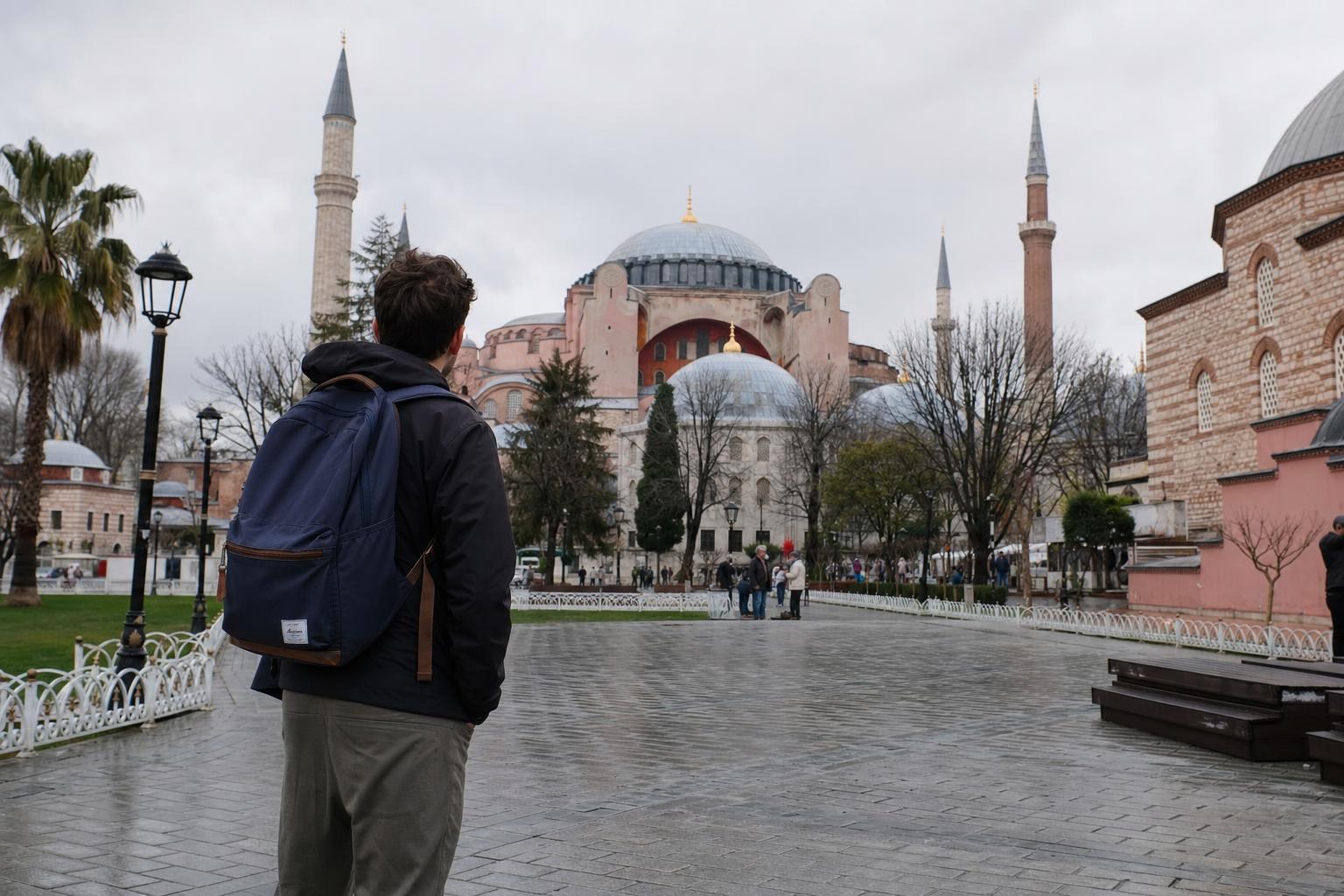
This area, also known as Sultanahmet or the Historic Peninsula, forms the city’s ancient heart. Here, world-famous Byzantine and Ottoman sites—such as Hagia Sophia, the Blue Mosque, Topkapı Palace, Sultanahmet Square (the Hippodrome), and several key museums—are concentrated within walking distance. The official GoTürkiye guide recommends exploring this area as an integrated route, making it ideal for travelers with limited time wanting the richest historical experience.
2. Galata and Beyoğlu
North of the Golden Horn lies Galata, most recognizable for the iconic Galata Tower with its panoramic city views. This area is part of the broader Beyoğlu district, intertwined with lively commercial streets and representing a bridge between historic quarters and Istanbul’s contemporary urban pulse.
3. The Bosphorus Waterfront
The Bosphorus strait divides the city, its waterfront lined with historic palaces, vibrant neighborhoods, and lively ferry docks. Official guides underline the unique seafood and street food culture found along both European and Asian shores, as well as the opportunity for scenic walks and boat tours with sweeping city vistas.
Historic Peninsula: Sultanahmet’s Must-See Landmarks
Hagia Sophia (Ayasofya Grand Mosque)
One of the world’s great monuments, Hagia Sophia dominates Sultanahmet’s skyline. Official cultural descriptions highlight its origin as a grand Byzantine basilica, later transformed into a mosque and at times repurposed as a museum. Visitors today find an immense central dome, intricate mosaics, and a building steeped in religious and artistic significance.[1]
The Blue Mosque (Sultanahmet Camii)
Directly facing Hagia Sophia, the Blue Mosque is celebrated for its six slender minarets and soaring cascade of domes. The mosque’s interior is renowned for walls lined with thousands of İznik-style blue tiles that give the mosque its popular name. It remains both a working house of worship and one of Istanbul’s signature sights.[2]
Topkapı Palace
Just a short walk from these monuments is Topkapı Palace, once the seat of Ottoman sultans. The extensive complex includes palace courtyards, museum exhibits, and religious buildings (notably Aya İrini, within palace grounds), holding a trove of artistic and sacred artifacts from Turkish and Islamic heritage.[3]
Sultanahmet Square (Hippodrome)
Acting as Sultanahmet’s main plaza, the Hippodrome (now Sultanahmet Square) links the area’s sights and is itself home to striking monuments including the Obelisk of Theodosius and the German Fountain. The square remains a vibrant meeting point and a natural orientation landmark for exploring the peninsula.[4]
Museum of Turkish and Islamic Arts
Next to the Hippodrome, this museum showcases an extensive collection of artefacts spanning the Selçuk and Ottoman periods: ceramics, calligraphy, rare Qur’ans, and a highly regarded carpet collection, all housed in a grand 16th-century palace setting.[5]
Galata District: Views and Urban Energy
Galata Tower
Perched atop a hill north of the Golden Horn, Galata Tower is singled out in official guides for its commanding 360-degree views across Istanbul. The district’s blend of old and new—historic landmark buildings and the energetic urban life of Beyoğlu’s main streets—makes it an essential counterpoint to Sultanahmet. Wandering the Galata neighborhoods, visitors are treated to a mix of vibrant cafe culture, art spaces, and bustling pedestrian avenues.[6]
Bosphorus: The Waterfront Experience
Stretching from the city center to more remote waterfront districts, both European and Asian shores of the Bosphorus offer striking vistas and daily-life scenes unique to Istanbul. Official tourism advice points out the significance of the strait not only as a boundary, but as a culinary and recreational artery for the city, recommending walks, ferry rides, and sampling fresh seafood from local vendors.[7]
Getting Around: Istanbul’s Modern Metro and Tram Services
Urban Rail and Metro
Moving between Istanbul’s diverse neighborhoods is made easier by the city’s integrated rail and tram network, managed by Metro İstanbul. The network, detailed in official reports, encompasses multiple metro lines, trams, funiculars, suburban trains, and the Metrobus. Comprehensive maps from Metro İstanbul clearly designate operational lines and key transfer points, including connections to coach stations and airports. This makes it feasible to reach most key landmarks and neighborhoods without private transport.[8]
Planning Tips
- Prioritize the Historic Peninsula cluster for concentrated historic sites on a short visit.
- Use Istanbul’s metro, tram, and funicular for faster transfers between major districts, referencing official Metro İstanbul maps for accurate connections.
- Confirm any operational details—such as current opening times or public transit disruptions—with the corresponding organization or attraction before visiting, using their official websites.
What Remains Unverified
While official Turkish tourism sources provide thorough thematic and geographic descriptions of Istanbul’s highlights and infrastructure, they do not include real-time or operational specifics such as current admission fees, daily opening hours, entry rules, or live transit statuses. Visitors are encouraged to verify these directly, as information may change.
Conclusion
Istanbul, Turkey is a richly layered city where past and present exist side-by-side. By grouping your exploration—starting with Sultanahmet’s monuments, then branching into the Galata district and along the Bosphorus—you’ll experience the city’s most distinctive faces. Leverage the integrated Metro İstanbul network to maximize your time and enjoy the seamless urban connectivity that defines modern Istanbul.
Sources and further reading are provided for detailed planning and access to official maps.
Key takeaways
- Istanbul’s Historic Peninsula (Sultanahmet) concentrates major Byzantine and Ottoman monuments within a walkable area.
- The Blue Mosque, Hagia Sophia, Topkapı Palace, and the Hippodrome/Sultanahmet Square form the city’s best-known historic route.
- Galata (and Beyoğlu) offers panoramic views from Galata Tower and a vibrant street life just north of central Istanbul.
- The Bosphorus waterfront highlights Istanbul’s unique geographic position and lively food scene with seafood and local specialties.
- Metro İstanbul’s integrated network of metros, trams, and funiculars is key for navigating between major districts.
- Official sources describe the character and grouping of landmarks but do not provide live operational details—verify before you go.
Comparisons & planning
| Area | Major Landmarks | Distinctive Feature | Official Source |
|---|---|---|---|
| Historic Peninsula (Sultanahmet) | Hagia Sophia, Blue Mosque, Topkapı Palace, Museum of Turkish and Islamic Arts | Most historic sites concentrated, walkable route | goturkiye.com |
| Galata/Beyoğlu | Galata Tower, main commercial avenues | Panoramic views, lively urban zones | goturkiye.com |
| Bosphorus Waterfront | Waterfront palaces, ferry docks | Scenic strait views; local seafood | goturkiye.com |
Travel checklist
- Orient yourself using the official city cluster: Historic Peninsula, Galata, and the Bosphorus.
- Plan a walking route through Sultanahmet to capture the city’s core monuments in one area.
- Include both museum visits (e.g., Museum of Turkish and Islamic Arts) and open-air landmarks (Sultanahmet Square, Hippodrome).
- For broader city views, schedule time for Galata Tower and the surrounding neighborhood.
- Sample waterfront culture and food along the Bosphorus, especially in district markets or cafes.
- Use Metro İstanbul’s official maps to plan transfers between neighborhoods.
- Check each attraction’s official website for up-to-date visiting details.
Frequently asked questions
What are the must-see attractions for a first visit to Istanbul, Turkey?
Official guides highlight Hagia Sophia, the Blue Mosque, Topkapı Palace, Sultanahmet Square (the Hippodrome), and Galata Tower as essential, all within Istanbul’s Historic Peninsula and adjacent neighborhoods.
How do I get around Istanbul as a first-time visitor?
Istanbul’s Metro İstanbul network includes metro, tram, and funicular lines linking main districts. Official maps show connections to historic sites, coach stations, and airports. Use public transit for efficient travel between areas.
Where can I experience the best views of Istanbul?
The Galata Tower offers 360-degree views of Istanbul. Scenic waterfront walks and ferry rides along the Bosphorus provide unique perspectives of the city’s skyline and historic districts.
Are operational details like entry fees and opening hours published on official tourism sites?
Official Turkish tourism sources provide thematic and geographic descriptions of attractions but do not include live operational details such as prices or opening times; these must be verified directly with each site.
Sources and research notes 3 sources
Based on official source material. Check provider websites for changing visitor details.
Conversation
Sign in or create an account to join the conversation.