Destinations
Dubai, United Arab Emirates: Essential Destination Overview and First Visit Guide
Discover Dubai’s dynamic neighbourhoods, from historic Dubai Creek to ultramodern Downtown. This essential guide covers main attractions, area groupings, public transport options, and practical planning tools for a successful first visit.
AI illustration · Wardhead AI · AI-generated illustration
Dubai, United Arab Emirates, is renowned as a dynamic city where futuristic ambition meets deep-rooted heritage. Home to over four million residents, Dubai is organised into diverse neighbourhoods stretching across sunlit shores, cutting-edge urban cores, and time-honoured historic quarters. Whether you seek sky-high viewpoints, vibrant beaches, desert excursions, or cultural experiences, understanding Dubai’s main areas and transport options is key to enjoying a smooth and memorable visit.
City Overview: Contrasts on Display
Dubai’s official tourism portals describe the city as an international hub that welcomes visitors to explore both world-famous icons and lesser-known corners. Visitors encounter a blend of record-breaking modern architecture, creative cultural districts, public beaches, and traditional marketplaces along the city’s historic waterways.
Key Neighbourhoods: Where to Focus
Downtown Dubai and Burj Khalifa District
Downtown is Dubai’s urban showpiece and a logical starting point. Here, the Burj Khalifa—widely promoted as an essential landmark—towers over the skyline, paired with the sprawling Dubai Mall. This compact district offers easy access to observation decks, performance fountains, and a cluster of major attractions. The area is designed for sightseeing, shopping, and dining, making it highly accessible for first-time visitors.
Dubai Marina, Jumeirah Beach, and Waterfronts
Water lovers can head to Dubai Marina and the Jumeirah Beach stretch, including destinations like JBR (The Beach) and Kite Beach. These neighbourhoods are highlighted by the tourism board as Dubai’s premier hubs for relaxed seaside living, outdoor sports, and waterfront dining. Modern towers define the Marina’s skyline, while public beaches and promenades make Jumeirah a favourite for both recreation and leisure.
Historic Dubai and Dubai Creek
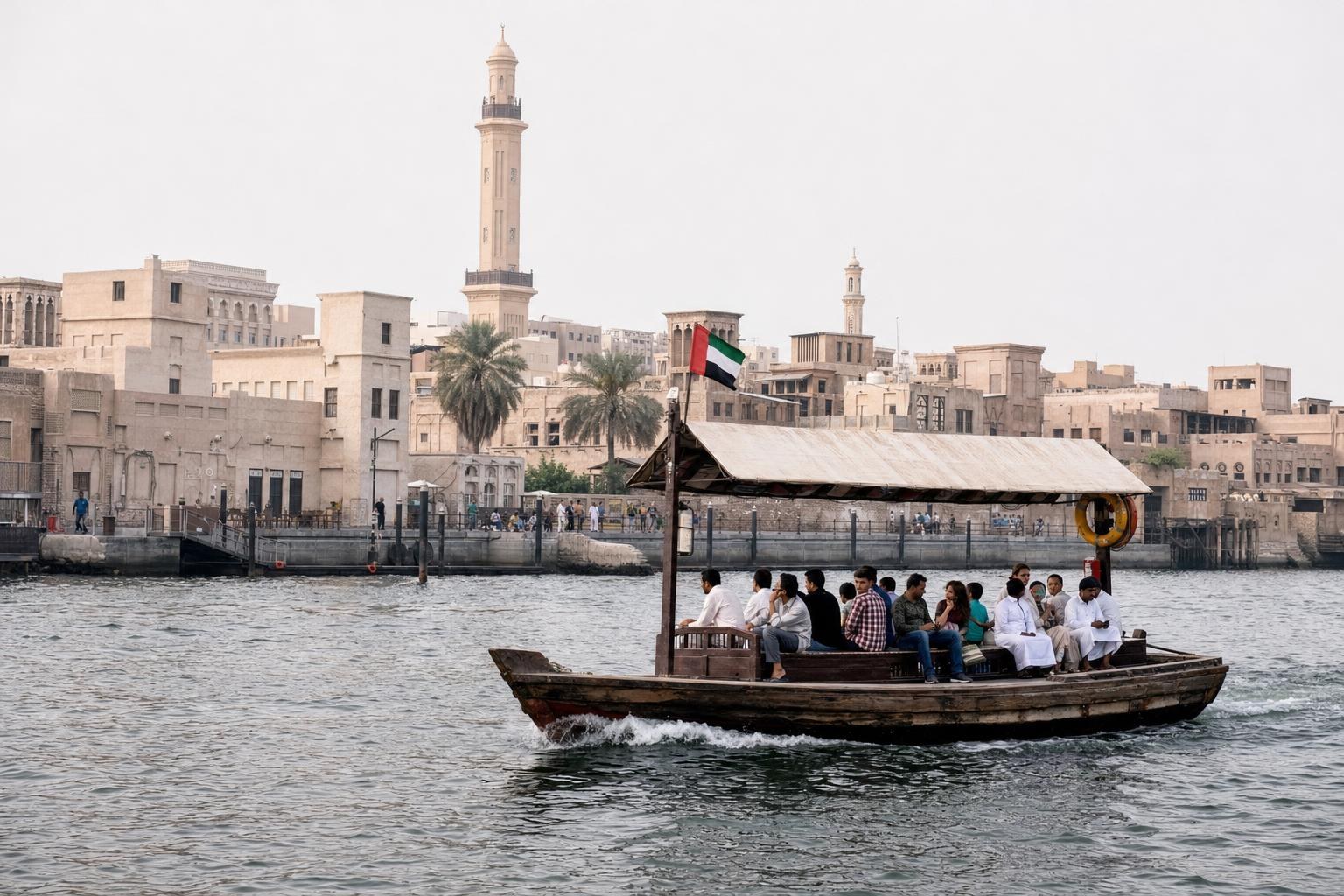
For those drawn to Dubai’s roots, the official guides point to the historic Dubai Creek area and Al Fahidi, the city’s heritage quarter. Here, winding lanes, traditional souks (markets), and restored landmarks paint a picture of Dubai’s trading past. Abra (wooden water taxi) rides across the Creek are frequently recommended for a classic local experience, alongside heritage museums and cultural walks.
Attractions and Experiences: Signature Highlights
Modern Marvels
- Burj Khalifa: Celebrated as the city’s defining icon, with observation decks offering panoramic views.
- Dubai Mall: A vast mall with more than just shopping; features family attractions and themed entertainment zones.
- Museum of the Future: Promoted as a unique space focused on science, technology, and innovation.
Beaches, Outdoor and Desert Adventures
- JBR Beach, Kite Beach: Popular public beaches for swimming, beach sports, and seaside strolls.
- Desert Experiences: Camel rides, sandboarding, and organized desert camps are highlighted as foundational Dubai leisure activities.
Theme Parks and Family Entertainment
- Major theme parks and water parks, along with large-scale entertainment complexes and resort developments, are positioned as core family-centric attractions. Dubai Parks and Resorts is a notable example.
Culture and Creative Neighbourhoods
- Al Fahidi: Visit Dubai promotes this neighbourhood for its museums, historic houses, and old-world ambiance.
- Alserkal Avenue: Recognized as a contemporary creative hub with galleries and cultural spaces.
Getting Around Dubai: Transport Essentials
Integrated Public Transport
Dubai’s public transport network—managed by RTA—includes the driverless Dubai Metro, Dubai Tram, and an extensive bus network. Official sources recommend the Metro as an efficient, tourist-friendly way to move between Downtown, Marina, and other core areas. Interchange stations and fare zones are mapped out for easy transfers across modes.
nol Card: One Payment, Multiple Modes
The nol card operates as a unified smart payment solution, accepted across Metro, tram, buses, marine transport services (including ferry, water taxi, and abra), as well as for other RTA-related services. Tourists can choose from several card types, top up at stations, machines, or participating agents, and use one balance for seamless travel. Since network details and fare calculations depend on zones, the RTA website should be consulted for current maps and precise fare rules.
Marine Transport and Creek Crossing
Dubai’s marine network features traditional abras, highlighted for their role in crossing Dubai Creek, and modern marine services such as Dubai Ferry and water taxis. These are integrated into the wider transport ecosystem and accept nol card payment—making them convenient options for crossing the historic core or exploring the city by water.
Planning Tools: Maps, Apps, and Official Passes
The official Visit Dubai portal provides a wealth of practical tools, including downloadable city maps, attraction guides, comprehensive PDF guides, and a mobile app for on-the-go trip organization. For those keen on maximizing sightseeing, the portal also promotes attraction passes and bundled booking options for top museums, entertainment parks, and iconic experiences. These allow visitors to streamline entry and schedule, although the most current entry conditions and availability should always be checked directly.
Limitations and Live Details
This guide draws wholly from verified official sources, focusing on evergreen facts and published area groupings. Exact opening hours, changing admission policies, up-to-date fare details, visa requirements, and legal entry conditions are not included here due to evidence limitations. For all such time-sensitive details, always consult the latest updates directly on the relevant Visit Dubai or RTA websites.
Conclusion
Dubai’s appeal lies in its contrast: breathtaking modernity set alongside centuries-old tradition. With distinct districts from the sky-high Downtown core and sun-filled beaches to Creek-side heritage neighbourhoods, visitors can craft an itinerary that reflects their interests. By using official planning resources, neighbourhood groupings, and the unified transport network, first-time travellers can unlock a city that rewards both curiosity and careful planning.
Key takeaways
- Dubai is a globally connected city with striking contrasts between modern icons and historic districts.
- Distinct neighbourhoods include Downtown (for Burj Khalifa), Dubai Marina and Jumeirah (for beaches), and Dubai Creek/Al Fahidi (for heritage and souks).
- Public transport is efficient, with the Metro, tram, buses, and marine options all accessed using the nol card.
- Official downloadable guides, city maps, and attraction passes are available for visitor planning from the Visit Dubai portal.
- Live operational details like fares, entry hours, and visa requirements must be checked on official websites.
Comparisons & planning
| Area | Core Character | Key Highlights | Typical Activities |
|---|---|---|---|
| Downtown Dubai | Modern urban core, iconic skyline | Burj Khalifa, Dubai Mall | Sightseeing, shopping, observation decks |
| Dubai Marina & Jumeirah Beach | Waterfront leisure, public beaches | JBR/The Beach, Kite Beach, Marina promenade | Beach relaxation, watersports, dining |
| Historic Dubai & Dubai Creek | Heritage, old markets, Emirati culture | Al Fahidi quarter, Creek, souks, abra rides | Cultural walks, shopping, heritage museums |
| Alserkal Avenue | Contemporary arts/creative hub | Galleries, events, creative businesses | Art exhibitions, local culture |
| Mode | Key Coverage | Payment Accepted | Notes |
|---|---|---|---|
| Metro | Major neighbourhoods & business areas | nol card | Air-conditioned, frequent, driverless |
| Tram | Marina & Jumeirah areas | nol card | Links to Metro, serves waterfront |
| Bus | All districts | nol card | Extensive network, integrated fares |
| Marine (Ferry, Water Taxi, Abra) | Creek, waterfront, Palm/Jumeirah links | nol card | Includes traditional and modern boats |
Travel checklist
- Download official maps and PDF guides from the Visit Dubai website.
- Start sightseeing in Downtown Dubai for iconic views and clustered attractions.
- Explore waterfront leisure at Dubai Marina and Jumeirah Beach areas.
- Visit heritage quarters around Dubai Creek for souks, museums, and abra rides.
- Obtain and top up a nol card for access to Metro, tram, bus, and marine transport.
- Plan for family-friendly days at theme parks or cultural stops like Museum of the Future.
- Consult official sources for up-to-date entry rules, transport maps, and attraction hours.
Frequently asked questions
What is the nol card and why do visitors need it in Dubai?
The nol card is Dubai's unified smart payment card accepted across Metro, tram, bus, and marine transport services, making it essential for convenient travel between city attractions.
Which area is best for first-time sightseeing in Dubai?
Downtown Dubai is the recommended starting point for first-time visitors, offering easy access to Burj Khalifa, Dubai Mall, and clustered urban attractions.
Can I use public transport to reach beaches and historic sites?
Yes, Dubai Metro, tram, and bus networks provide connectivity between Downtown, Marina, Jumeirah Beach, and historic Dubai Creek districts. Use the nol card for seamless access.
Where can I find official maps and visitor planning resources for Dubai?
Downloadable maps, city guide PDFs, and an official trip-planning app are available via the Visit Dubai website, offering reliable information for route and itinerary planning.
Has anything here changed?
Help us keep these practical details accurate.
Sources and research notes 2 sources
Based on official source material. Check provider websites for changing visitor details.
Conversation
Sign in or create an account to join the conversation.