Travel tips
Navigating Osaka’s Arrival-to-Minami Corridor: Realistic Transfer Times and Connections Between Kansai Airport, Shin-Osaka, Umeda, and Namba
A practical guide for travelers arriving in Osaka, Japan, focused on realistic transfer times, interchange friction, and the best transport links between Kansai International Airport (KIX), Shin-Osaka, Umeda, and Namba—the essential north-south travel corridor for visitors. Find out how to navigate these major nodes, what to consider for smooth transfers, and useful planning strategies using official tourism resources.
AI illustration · Wardhead AI · AI-generated illustration
Osaka, Japan, is a city shaped by efficient, intersecting transport corridors—but for visitors, reaching central districts smoothly from Kansai International Airport (KIX) or the Shinkansen hub at Shin-Osaka means deciphering a mosaic of train lines, transfer nodes, and busy interchange stations. This guide demystifies the main 'arrival-to-Minami' corridor—how to realistically plan your movement along the vital north-south axis linking Kansai Airport (KIX), Shin-Osaka, Umeda (Osaka Station), and Namba.
Why This Corridor Matters
Most travelers begin their Osaka journey at one of two key arrival points: Kansai International Airport (KIX) for international flights, or Shin-Osaka for bullet trains (Shinkansen). The main visitor hubs split north (Umeda/Kita) and south (Namba/Minami), each bustling with landmarks—so knowing your transfer options is essential. Umeda is Osaka’s business and transit heart, whereas Namba anchors shopping, entertainment and easy access to sights like Dotonbori and Kuromon Ichiba.
Overview: Core Arrival and Transit Hubs
- Kansai International Airport (KIX): Main air gateway to Osaka, directly linked to city by rail and bus.
- Shin-Osaka: Shinkansen (bullet train) hub, north-central, connects onward via subway and JR lines.
- Umeda/Osaka Station: Complex northern commercial/transit node for JR and private railways, vital for north-south movement.
- Namba: Southern hub for shopping, entertainment, and major intersecting lines (Metro, JR, Nankai).
Step 1: Arrival at Kansai International Airport (KIX)
KIX sits on an artificial island south of central Osaka, requiring a transfer into the city. Three main modes officially serve the airport:
- Dedicated airport express trains (Nankai and JR lines)
- Airport limousine buses
- Taxis (practical for groups or door-to-door requirements)
*Key Destinations from KIX*: Namba (Minami cluster, southern city center), Shin-Osaka (Shinkansen hub), and Umeda (northern business and shopping zone).
**Rail Transfers:**
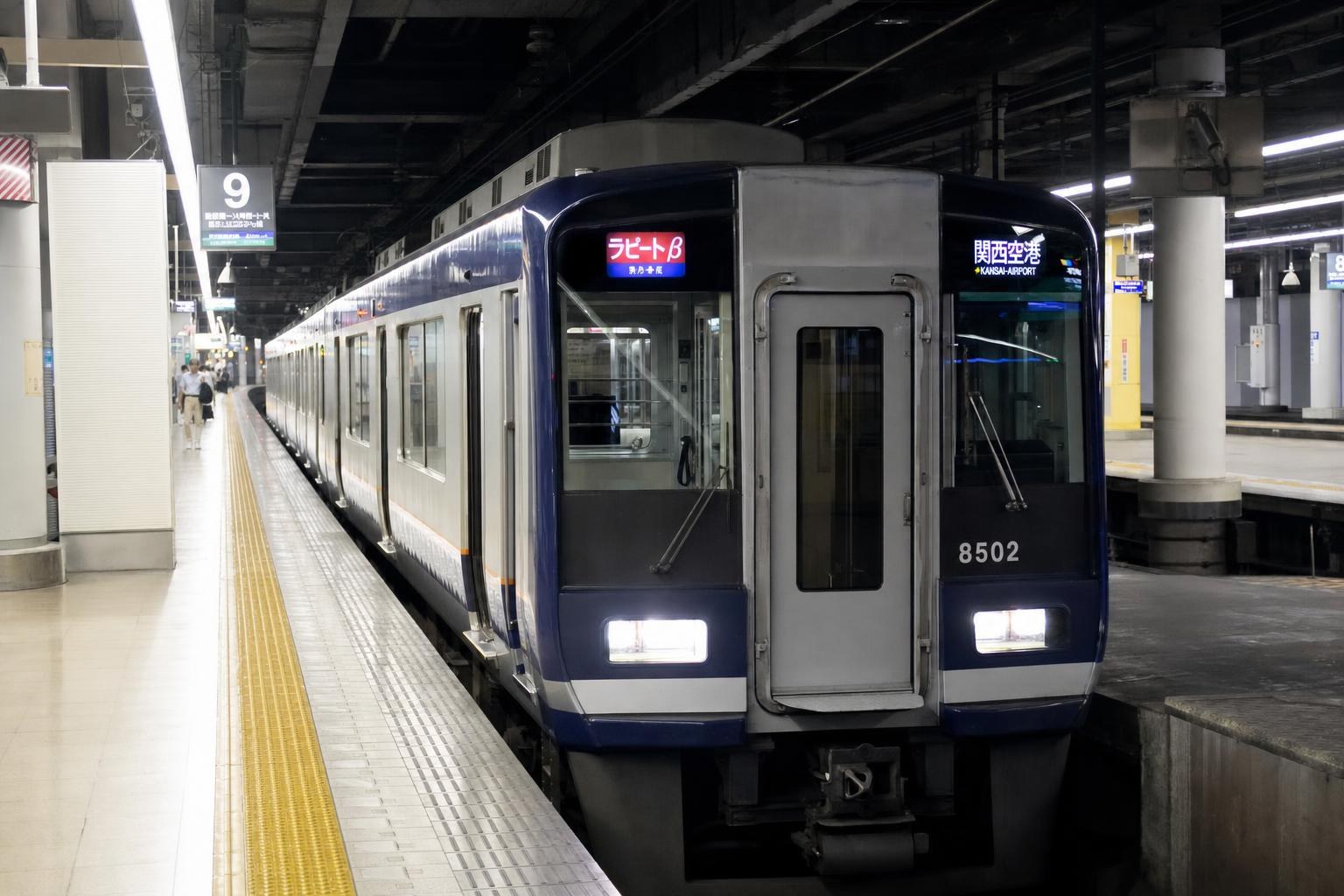
- Nankai Airport Express and Nankai Limited Express "Rapi:t" link KIX directly to Namba Station, making Namba the quickest and most direct central station for Minami-bound travelers.
- JR West's Kansai Airport Rapid Service and Haruka Express connect KIX to Shin-Osaka and Osaka (Umeda area), giving travelers an alternative for northern city destinations or Shinkansen connections.
**Bus Transfers:**
- Limousine buses serve multiple city locations, stopping at both Umeda and Namba, convenient for those with larger luggage or seeking a one-seat ride.
**Interchange Considerations:**
- At peak times, platforms and walkways at KIX and in city stations can be crowded; maps and station diagrams are recommended for first-timers to avoid missed transfers.
Step 2: Shin-Osaka—Shinkansen Arrival Hub
If you enter Osaka by bullet train (Shinkansen), you’ll arrive at Shin-Osaka. It functions as the north-central hub, with immediate access to the Osaka Metro Midosuji Line, which runs north-south through the city:
- One stop north to Umeda (Osaka Station)
- Several stops south directly to Namba
Osaka Metro’s Midosuji Line is the city’s "red spine," making Shin-Osaka a straightforward launch point for travel along the corridor. The connection is within the station area, but passengers should follow signs carefully; station layouts can be complex for newcomers.
Step 3: Umeda/Osaka Station—Northern Transit Complex
Umeda (also referred to as Osaka Station) is a sprawling station cluster, home to JR lines, Hanshin/Hankyu private railways and multiple Metro lines. For most visitors transferring across the city:
- Midosuji Line (Metro, red line) is the principal north-south route from Umeda to Namba.
- For travel to Osaka Castle or Tennoji, connect via other Metro lines (Tanimachi, Chuo) from Umeda.
Transfer friction at Umeda is possible due to multiple buildings, exits, and operators sharing the same geographical area but with distinct ticketing zones and transfer walking distances. Official area maps are available for route planning.
Step 4: Namba—Southern Entertainment and Transport Hub
Namba represents the southern anchor of the corridor, serving as Osaka’s famed Minami district and entertainment heart. It is a true multi-operator hub:
- Osaka Metro (Midosuji Line, Sennichimae Line, Yotsubashi Line)
- Nankai Railway (for airport access and southbound travel)
- JR Namba (suburban and local lines)
- Kintetsu and Hanshin lines (private railways)
The official city maps cluster Namba, Dotonbori, and Kuromon Ichiba as walkable, with the station complex providing direct access to these sites. Note the multiple underground and above-ground passageways; detailed area maps are helpful to orient between operators and exits.
Realistic Transfer Times: What to Expect
While official Osaka tourism resources do not publish minute-by-minute estimates for every transfer, general practices supported by route maps and station complexity suggest:
- KIX to Namba: Direct Nankai Limited Express links (via Namba station); efficient and widely recommended for travelers heading to Minami.
- KIX to Shin-Osaka & Umeda: JR trains (Haruka Express to Shin-Osaka; Kansai Airport Rapid Service to Osaka/Umeda); buses offer similar routing flexibility.
- Shin-Osaka to Umeda: Single stop on Midosuji Line (or JR); transfer is direct.
- Umeda to Namba: Straight ride on Midosuji Line; official maps clearly mark this north-south link.
Allow time for station navigation at each interchange, especially with luggage or during peak periods. Download official city and station area maps from the Osaka Convention & Tourism Bureau before travel for easier wayfinding.
How to Strategically Plan Your Transfers
- Upon arrival at KIX, decide if your hotel or destination is more accessible via Namba (Minami) or Umeda (Kita), as this will determine your optimal transfer mode (Nankai for Namba, JR for Shin-Osaka/Umeda).
- If using the Shinkansen, transfer at Shin-Osaka onto the Midosuji Line for simple north-south movement.
- For sightseeing in Minami (Namba/Dotonbori), aim directly for Namba; for northern business/shopping, head for Umeda.
- Use official downloadable area maps to study station layouts in advance; these show exits, ticket gates, and key station transfers.
- Consider travel passes if planning multiple journeys; check which lines and operators are covered for your use case using official pamphlets and guides.
Connecting to Major Attractions from Each Node
- From Namba: Walk to Dotonbori, Kuromon Market (Minami cluster)
- From Umeda: Easy transfer to Osaka Castle via Tanimachi Line or JR
- From Shin-Osaka or Umeda: Direct access to Universal Studios Japan and Bay Area via changing at Nishi-Kuji or Bentencho; maps highlight these routes
Summary: Consult Official Transport Resources
To minimize friction, always use official access guides and downloadable route maps from the Osaka Convention & Tourism Bureau and JNTO. These reveal which train lines, bus links, and ticket passes best serve your specific arrival and destination points. Exact transfer timing can vary (especially for airport arrivals and during rush hours), but using the north-south corridor—KIX → Shin-Osaka/Umeda → Namba—is efficient when you use the correct hub for your planned activities and accommodations.
Key takeaways
- Kansai International Airport (KIX) links directly to Namba via Nankai trains and to Shin-Osaka/Umeda via JR lines.
- Shin-Osaka is the main Shinkansen (bullet train) hub; Midosuji Line offers fast north-south transit into Umeda and Namba.
- Umeda and Namba are complex multi-operator hubs—expect station navigation time, and consult official area maps.
- Official downloadable maps and route diagrams from Osaka tourism sites greatly aid efficient transfer and sightseeing planning.
- Namba, Dotonbori, and Kuromon Ichiba are walkable from central Namba Station.
- Choose your arrival transfer mode based on where you'll stay or visit first (Namba for Minami, Umeda for Kita).
Comparisons & planning
| Departure Point | Primary Mode | Destination Hub | Direct Line/Service | Key Operator | Note |
|---|---|---|---|---|---|
| Kansai Airport (KIX) | Rail (Nankai) | Namba (Minami) | Limited Express 'Rapi:t', Airport Express | Nankai Railway | Best for Minami/downtown stays |
| Kansai Airport (KIX) | Rail (JR) | Shin-Osaka/Umeda | Haruka Express (Shin-Osaka), Kansai Airport Rapid (Osaka/Umeda) | JR West | Best for Shinkansen or Kita |
| Kansai Airport (KIX) | Bus | Umeda/Namba | Airport Limousine Bus | Multiple | Convenient with luggage |
| Shin-Osaka | Metro | Umeda | Midosuji Line (one stop north) | Osaka Metro | Fast, direct |
| Shin-Osaka | Metro | Namba | Midosuji Line (south direction) | Osaka Metro | Direct to Minami |
| Umeda | Metro | Namba | Midosuji Line | Osaka Metro | Main north-south spine |
| Namba | Walk | Dotonbori/Kuramon | — | — | Within easy walking distance |
Travel checklist
- Download the official Osaka city route map before travel.
- Identify your arrival hub (KIX or Shin-Osaka) and your destination district (Umeda or Namba).
- Check which train or bus line serves your first hotel or planned stop best.
- Allow time for station navigation, especially with luggage.
- Consult area-specific station maps for Umeda and Namba to orient yourself.
- Review travel pass coverage and validity for multiple ride plans.
Frequently asked questions
What is the fastest way from Kansai Airport to Namba?
The Nankai Limited Express "Rapi:t" or Airport Express trains run directly from Kansai Airport (KIX) to Namba, the main hub of Osaka’s Minami area. Official guides highlight this as the most efficient rail option if Namba is your first stop.
How do you travel between Shin-Osaka, Umeda, and Namba?
All three are linked by the Osaka Metro Midosuji Line—the city’s main north-south corridor. Shin-Osaka to Umeda is just one metro stop; both are directly connected south to Namba. JR lines and private railways also link the hubs.
Are transfers difficult at Osaka’s main stations?
Stations like Umeda and Namba are complex, hosting multiple operators and expansive passageways. Official area maps and signage help, but allow extra time, especially with luggage or at peak hours.
Which transport pass is best for these transfers?
Refer to official Osaka travel pass guides to match passes with your route and operator choice. Some passes cover both subway and private rail lines, but coverage varies—check details before purchase.
Sources and research notes 3 sources
Based on official source material. Check provider websites for changing visitor details.
Conversation
Sign in or create an account to join the conversation.